

The automobile industry is very innovative. Manufacturers consistently use new technology to make vehicles people want. Many vehicles have features that establish trends within the industry.
We’ll explore advancements so far ahead of their time that they were initially rejected. Here are 15 vehicles that wowed consumers.
Honda Insight

The Honda Insight was one of the first electric vehicles available to a mass audience. The entire vehicle was engineered for optimal mileage. The Insight was lightweight, under a ton, with an aerodynamic shape, a small three-cylinder engine, and a ten-kilowatt electric motor. The EPA suggested it could achieve 53 miles per gallon, but drivers seriously dedicated to mileage could get even more out of it.
Buick Riviera CRT

This Buick looks like a late 1980s or early 1990s vehicle on the outside. But once you get in, you are greeted by an unexpected innovation: a touchscreen. The Riviera CRT had a “Graphical Control Center,” which included vital vehicle metrics. It was big, though not huge by modern standards, with a 9” display.
Citroen SM

Citroen packed some cool technology into the SM. Let’s start with an adaptive suspension, including hydro-pneumatic shocks, which change dynamically based on the weight inside the vehicle. Its wheels were made of lightweight carbon fiber instead of steel. Unfortunately, it didn’t sell all that well and was quickly canceled.
Chrysler Airflow
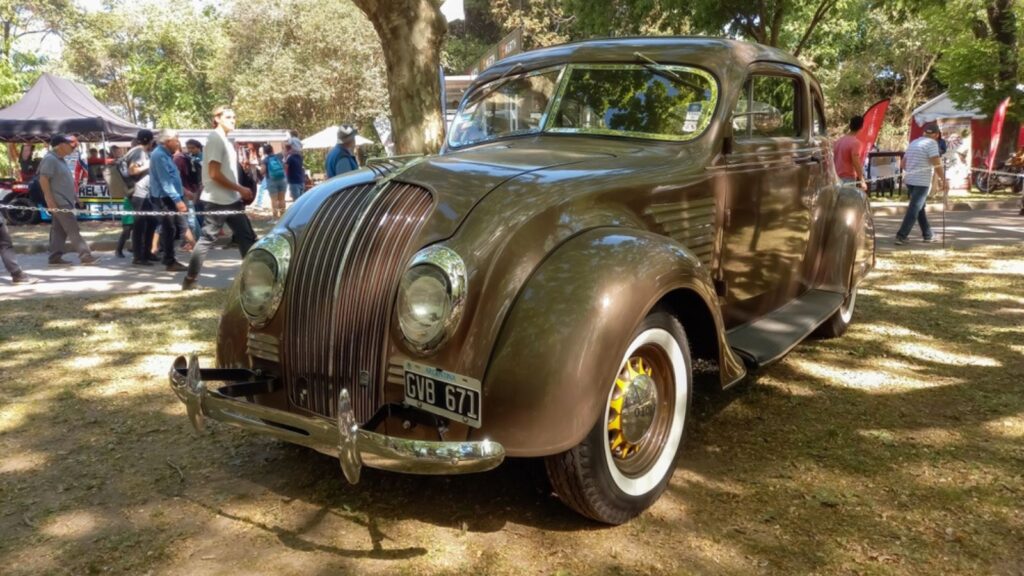
We are going back to the 1930s this time. The Airflow was Chrysler’s effort to make a more aerodynamic vehicle than the boxy shapes representing early automotive history. The Airflow looked similar to other cars of its time with more sweeping curves.
Unfortunately, it didn’t sell well at all, as buyers didn’t like the new design. When customers began to demand fuel efficiency and government regulation-targeted emissions, designs like the Airflow returned.
Tucker 48

It’s been said that classic cars are not very safe. The Tucker 48 addressed many driver concerns about safety and included several innovative safety features, like disc brakes and a windshield that could pop out in an accident instead of shatter. It even had a third headlight that turned to help light corners.
Chrysler Turbine

Ever want to operate a small jet engine? You could have it with the Chrysler Turbine. It was one of the first alternative fuel vehicles that could run on regular gas, jet fuel, alcohol, and even vegetable oils. While the idea sounds great, Chrysler deemed the vehicle too expensive to mass produce.
BMW i3

This one is relatively recent, as it launched in 2014. BMW decided to experiment with a carbon fiber material that is very lightweight and sustainable, as 95% of the vehicle is recyclable. The i3 has a gas-powered engine and an electric motor with a relatively short 100-mile range, which is great for urban environments where gas is easy to find in addition to outlets. BMW’s overall focus on sustainability and city-friendliness is good to see.
Audi A2

Aluminum and steel have been the primary materials used to make car frames for decades. The A2 was one of the first production vehicles mainly made from aluminum in 1999. The result was a lightweight vehicle (roughly 2,200 pounds) and a 1.4-liter TDI engine capable of 56 miles per gallon. This combination was way ahead of its time and genuinely impressive.
AMC Eagle

Consider the AMC Eagle the father of the modern crossover SUV. The Eagle looked like a lifted wagon with a ride height that made it exceptional for off-roading. Like today’s crossovers, its rugged looks didn’t detract from the Eagle’s nimble steering.
Tesla Roadster

Hear us out on this: Someone had to introduce the electric vehicle as a desirable one that wasn’t just about efficiency. The Roadster was launched in 2008 and could accelerate from 0 to 60 in less than four seconds while capable of 200 miles per change. It’s rather impressive…just saying.
Ford Taurus

Before the 1990s, nearly all non-sports cars were boxy and ugly by modern standards. The introduction of the Taurus with more aerodynamic lines set a new standard and made the car more fuel-efficient. Other manufacturers needed to spend some time catching up.
Chevrolet Volt

The Volt wasn’t the first hybrid, but it was ahead of its time. It was reasonably affordable, starting around $34,000, and had more space than most other hybrids. The Volt was popular because the gas and electric combo helped customers relieve battery range anxiety.
Range Rover

Released in 1970, the Range Rover became the first true luxury SUV. At the time, painted interior parts, rubber floor mats, and full-time four-wheel drive were considered luxury. It was also a seriously capable off-road vehicle. It was the first to make a drive across the Americas, including through parts of roadless jungle near Panama and Columbia.
Pontiac Fiero

The claim to fame for this sporty Pontiac was that it was the first American production vehicle with a mid-engine, which provided more power and better handling than other rear wheel drive vehicles. The Fiero was among the first vehicles made with lightweight composite plastics, making it especially fuel efficient, up to 50 miles per gallon.
Mercedes S-Class

Though many generations of the S-Class were ahead of their time, the 2004 edition stands out. The 2004 Mercedes S-Class packed tons of new technology, including one of the first helpful infotainment systems and several safety features, including adaptive cruise control and a collision mitigation system.
Forward-Thinking

The many modern vehicle luxuries we experience come from somewhere. What amenities have you experienced in your lifetime that you thought were advanced? What features do you want in your next vehicle?
More From Driver’s Drift

17 Cars That Are Incredibly Fun to Drive

13 SUVs with the Most Luxurious Interiors

13 Cars Owners Wish They’d Never Purchased

16 Reasons Why Some Americans Will Never Embrace Electric Vehicles


