

If you want to purchase a vehicle found on Facebook Marketplace, eBay, or some other online platform, the rule of thumb is buyer beware.
It’s not that you can’t get a good used ride using the Internet. But unless you’re careful, you may wind up with the type of car known as a lemon.
Millions of vehicles trade hands every year. While there’s less to worry about when purchasing something brand-spanking new, you have to be on your P’s and Q’s, dot your I’s, and cross your T’s if looking for a used vehicle that won’t leave you with buyer’s remorse.
Millions of Used Vehicles Sold in the U.S. Last Year

Cox Automotive estimates that nearly 35.9 million used vehicles were sold in retail and private transactions in 2023. Whether you buy used from a dealer or a private seller, you don’t want someone else’s hassle.
Many sellers are honest about the condition of their vehicles, but others want to unload their old clunkers by any means necessary. The latter will pull out all the stops so their ugly ducklings look like beautiful swans.
Some Omissions Are Worse Than Others
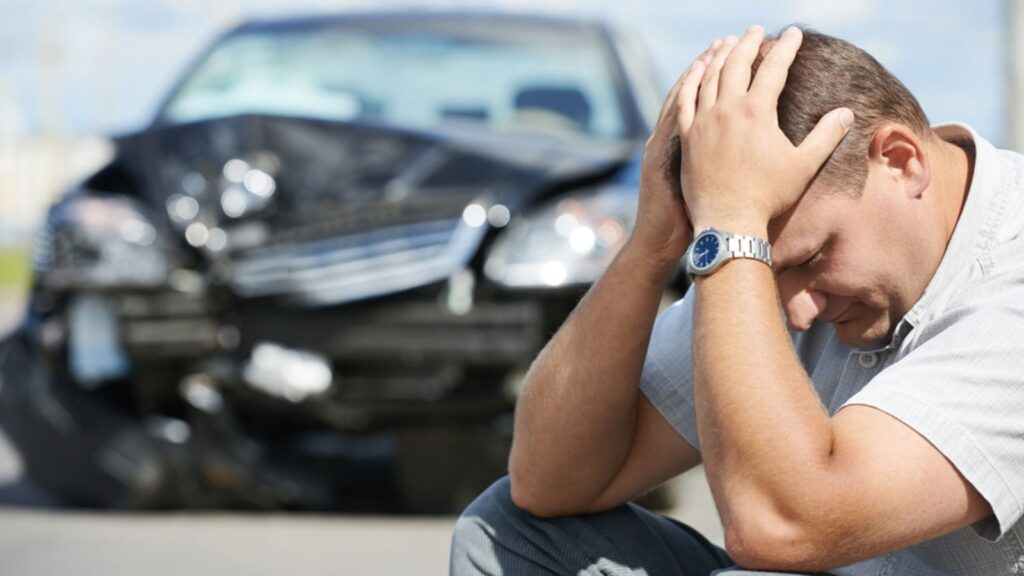
Some seller omissions are worse than others. If someone selling a vehicle says that the tires have barely 2,000 miles on them, and you find that the tires seem to have a lot less tread than what the seller suggests, that’s not necessarily a deal-breaker. You might try to negotiate a better price.
But if there’s serious structural damage that was undisclosed, you’ll want to back away and look elsewhere. It’s best not to transact with anyone using deceptive or loosey-goosey tactics to unload their hoopty.
You Need to Know the Signs a Car’s Been in a Fender-Bender

In the U.S., someone whose car has been written off as a total loss after sustaining severe damage can fix it and receive a rebuilt title. Any buyer should know what they’re getting—a totaled car that was fixed up. However, some owners will pull out all the stops to get a regular title that obscures the fact that the vehicle was severely damaged in an accident.
Here are 13 little-known tips that a vehicle has been in a bad accident and should be avoided unless you want to gamble with your money.
Overspray

Paint overspray isn’t just a sign of a sloppy paint job. If the overspray is near the wheel wells, trim, or door handles, it could suggest the body panel was replaced and repainted.
You’ll want to ask whether damage to the previous body panel necessitated the paint job. If you see it, ask questions and investigate further. If the answers are unsatisfactory, walk.
Mismatched Paint

When hunting for a used car, look for signs of mismatched paint. If the paint on adjacent body panels looks different, this could be a sign that someone repainted it after fixing any damage. Again, you’ll need to find out why there are two or more colors when there should be one.
Panel Gaps

Some automakers are better at building quality than others. So, you might see some gap inconsistency even in brand-new vehicles. If the gaps on a used car you’re looking at are inconsistent, be wary. You might notice these uneven or inconsistent gaps when assessing the hood, doors, or trunk. It could be a misalignment caused by a previous collision.
New Bolts on the Hood or Fender

New bolts on the fender or hood are red flags if the vehicle is used. It could be a telltale sign that these parts were removed and replaced because of damage sustained in a collision.
Water Damage or Rust in Trunk and Spare Tire Area

Other signs that the used vehicle you’re inspecting might have been in a serious accident are signs of water damage, rust, or lack of symmetry in the truck or spare tire section. If the car was previously rear-ended, you might find telltale signs in the trunk or spare tire section. Be on the lookout.
Uneven Tire Wear

Significant uneven tire wear is also a red flag. It could signal alignment issues. If a car was in an accident that damaged the frame, alignment problems could occur. That’s especially true if the repairs were unsuccessful.
Underbody Issues

You can’t thoroughly assess a car’s condition if you don’t access the undercarriage. Whether you use a jack and jack stands, car ramps, or get down on your hands and knees, check the underbody for issues. Are there signs of bending or buckling? If so, the car may have been in an accident.
Welding Marks
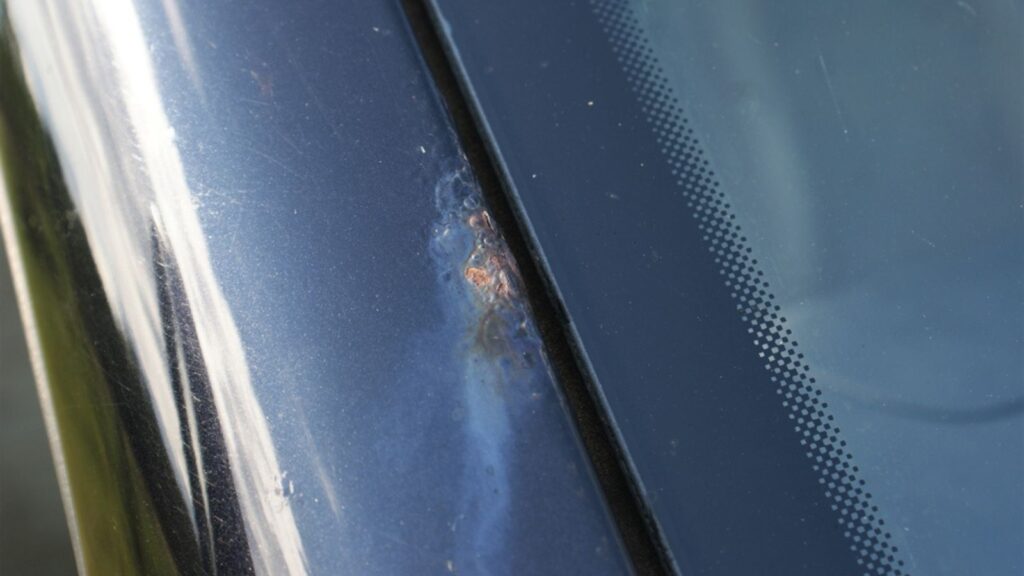
Welding marks could indicate that the car you’re looking at may have been in an accident. A good welder can give a vehicle a new lease on life. But anyone who buys a car with a welded frame should know this in advance so they can decide whether or not to buy it.
Airbag Deployment

According to Automotive News, as of September 1, 1998, all cars and light trucks sold in the country were required to have front airbags for both the driver and the passenger.
Assuming the vehicle you’re considering was manufactured after airbags were mandatory, ensure they’re properly intact. If there are gaps around the dashboard or steering wheel where the airbags are installed, that could mean the original ones deployed and were subsequently replaced.
Check for Filler

It’s best to avoid cars with more filler than metal. If a car vehicle has been seriously damaged, some repair shops will use body filler to fix the damage more inexpensively.
Bring a magnet with you when checking out a used car. Of course, the magnet won’t stick to body filler. If you find body filler galore, you may want to consider another vehicle instead.
Rough Patches of Paint

Rough patches of paint shouldn’t be overlooked. They could demonstrate that the paint job after a serious repair was shoddy. Run your hand against the panels. Different textures could signal a paint job after a repair.
Radiator and Mounting Points

When you pop the hood to look around the engine bay, check out the radiator. If the radiator looks new, misaligned, or damaged, take note. Also, observe if the radiator supports or mounting points look new. Any irregularities may be the result of a front-end accident.
New Carpeting

While new carpeting might seem like a good deal in a used car, you might want to investigate what’s under the carpeting. New or mismatched carpeting could cover signs of water damage or rust resulting from patchwork repairs that didn’t hold up all that well.
It’s Buyer Beware!
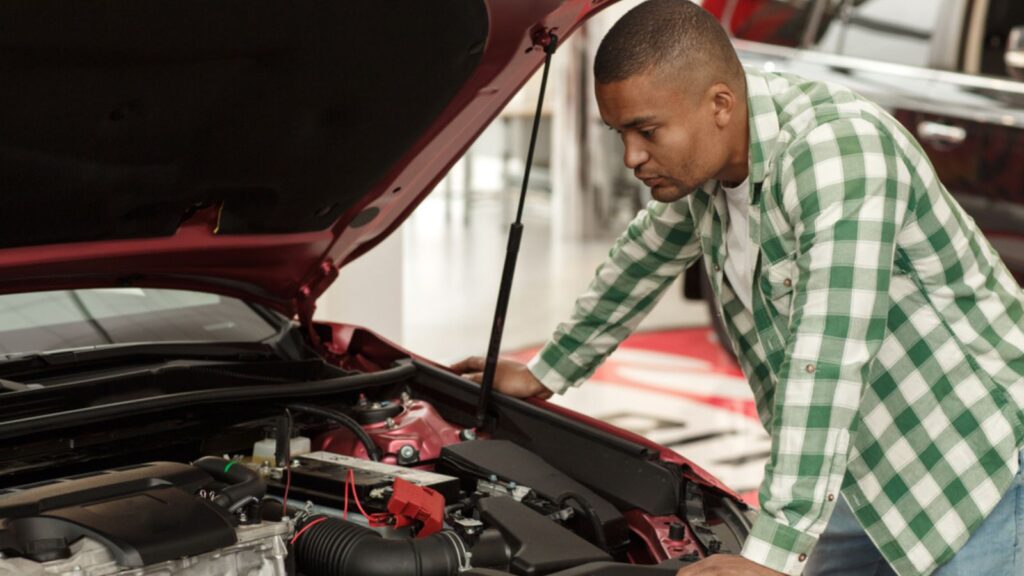
While buying a used car can be a great way to get a good deal, you might be taking on someone else’s problems if you’re not wary. Your best bet is always to get a professional mechanic to perform a thorough pre-purchase inspection. That way, you’ll know exactly what you’re dealing with so you can decide whether to make an offer.
More From Driver’s Drift

15 Easy-to-Miss Signs of Unmarked Cop Vehicles You Should Know About

16 Must-Have Car Gadgets That All Senior Motorists Should Own

15 Things Boomers Taught Us About Cars Which are Totally Wrong Today

12 Most Reliable Hybrids You Should Consider Buying as Your Next Drive


