
Do you instinctively look down at the speedometer after spotting a police car? We’re more attentive to speed limits, giving other vehicles sufficient space, and signaling before performing lane changes when the long arm of the law is close enough to pull us over and hand us a ticket.
Unmarked Cop Cars Blend in Quite Well

It’s easy enough to be on the lookout for traditional police vehicles. But it’s not as straightforward to identify unmarked cop cars.
You might feel safe driving a little faster than the posted speed limit on the freeway- only to get pulled over by an officer driving an unmarked car. That’s enough to ruin anyone’s day and lighten their wallet, too. Here are 15 easy-to-miss signs of unmarked cop vehicles on the road.
Police Uniform

Sometimes, cops in unmarked cruisers wear their official uniforms. The thing is that by the time you notice the uniforms, it’s already too late if you’re going 100 mph in an 80 mph zone.
Multiple Antennas

Most civilian vehicles have a single antenna. If you see a car with multiple antennas shooting up from the roof or trunk, watch out. Unmarked cop vehicles require more than one communication channel for things like GPS, radios, and other useful tech. That requires multiple antennas.
Dark Tinted Windows

Different areas have regulations about how dark vehicle windows can be. So, if you see a vehicle on the road with a tint so dark that the window might as well be coated with black paint, that’s a sign the driver either doesn’t care about being fined or doesn’t have to worry about being fined (wink! wink!). If it’s the latter, a police officer is likely behind the wheel.
Municipal Plates

Sometimes, unmarked police cars are equipped with municipal plates. Municipal plates often include a few numbers rather than a mix of numbers and letters. This goes over the heads of many civilians.
Specific Cars Associated With Police Fleets

Be on the lookout for certain types of cars that police departments in the U.S. use as marked and unmarked cop cruisers. They include brands like Ford Crown Victoria, Ford Taurus, Ford F-150 Responder, Chevy Caprice, Dodge Charger Pursuit, Chevy Tahoe, Ford Explorer, and more.
Lights Where Lights Aren’t Supposed to Be

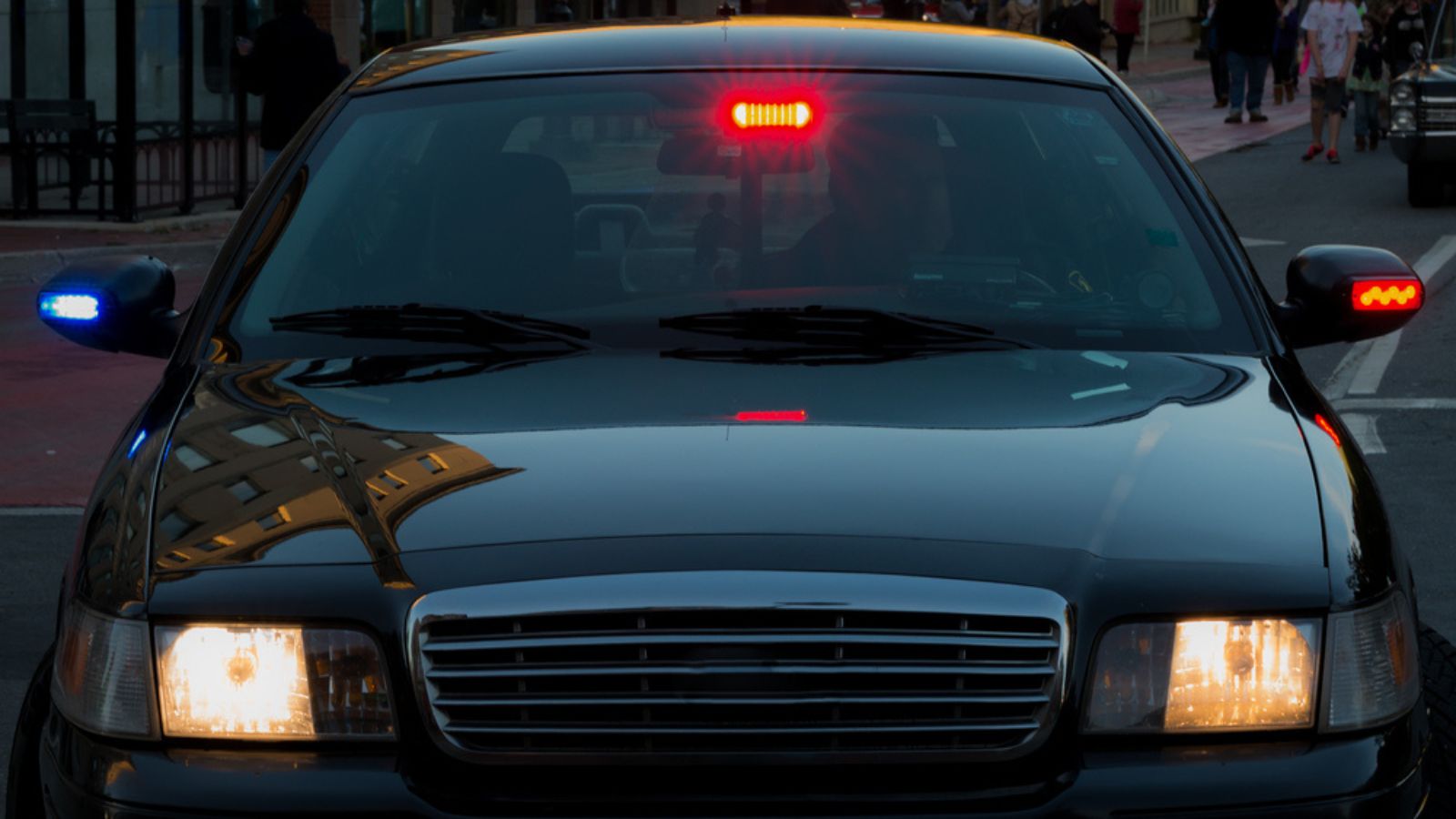
If you’re sitting behind the wheel of your car and see a vehicle behind you with lights where lights typically aren’t mounted, take notice. Unmarked police cars often have lights mounted on side mirrors or the grille. A car with too many lights will stick out like a sore thumb — if you’re aware of your surroundings and know what to look for.
A Bullbar is Attached to the Grille

While bullbars are not an absolute sign of unmarked police cars, they’re reason enough to pay close attention. Whether you call them bullbars, push bars, brush guards, grilled guards, rammers, nudge bars, or whatever other synonyms they go by, seeing them on the grilles of non-SUVs or trucks should raise an internal alarm bell.
Extra Mirrors

Another sign of an unmarked police cruiser is a multitude of mirrors. Police vehicles, marked and unmarked, often have more mirrors than are found on civilian cars. The extra mirrors help law enforcement officers get a better view of what’s happening around them. So, if you see a vehicle with a few too many mirrors, a plainclothes officer may be behind the wheel.
Dealership Tags Absent

Sometimes, unmarked police vehicles try too hard to blend in with civilian vehicles—so much so that they stand out. They may lack dealership tags to make the cars look more generic, but this is also a dead giveaway.
Driver Demeanor

If you see a suspicious-looking vehicle and notice that the driver is super alert, that could be a sign that a police officer is behind the wheel. A plainclothes officer in an unmarked vehicle might also drive a tad slower than other motorists to survey driver behavior.
Steelies

Most people driving newer vehicles get nice tire and rim packages. But not necessarily so with unmarked police cars. They’ll have quality tires, sure, but police departments don’t always splurge on expensive aluminum wheels. They’re work vehicles, after all. Often, they’ll stick with steelies — the sort of setup civilians pair with their winter tires.
Covered-Up Markings

Another dead giveaway of an unmarked police vehicle is covered-up markings. A disguised police car might have a vinyl car wrap to cloak any distinct markings identifying the vehicle as a police cruiser. The vinyl wrap will look out of place compared to civilian editions of the same vehicles.
Equipment Inside the Vehicle

Yet another sign that a vehicle is an unmarked cop car is the equipment inside. When passing by, take a look inside the vehicle. If there’s a laptop mounted close to the driver’s seat and radio gear, it’s a police car.
Being Followed
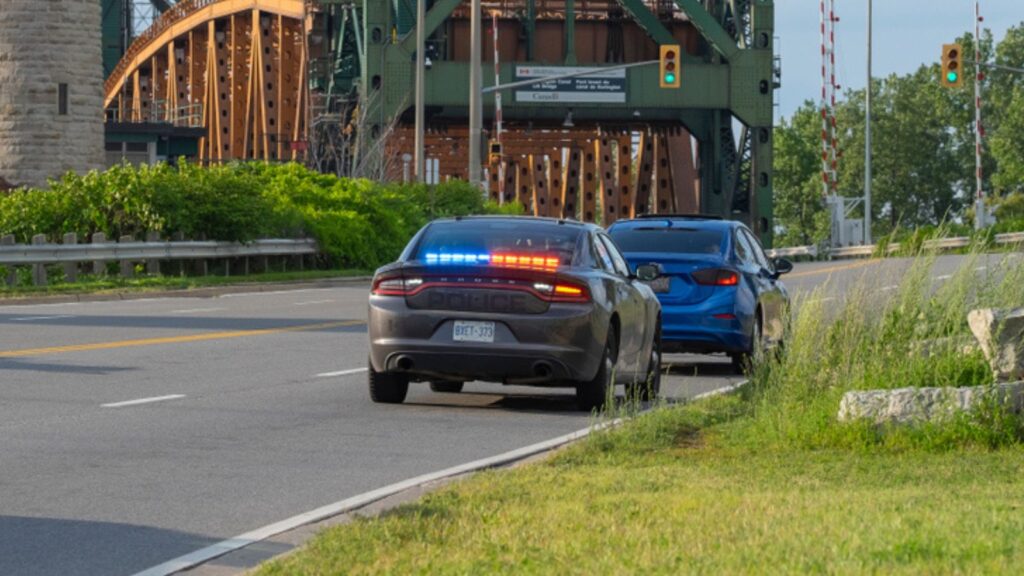
If a vehicle in front of you pulls over to the side, lets you pass, immediately merges into the lane behind you, and follows you, that should be enough to raise your internal antenna. While it might not be an unmarked police car, it is somewhat suspicious. Proceed with caution.
Following Behind Other Cars
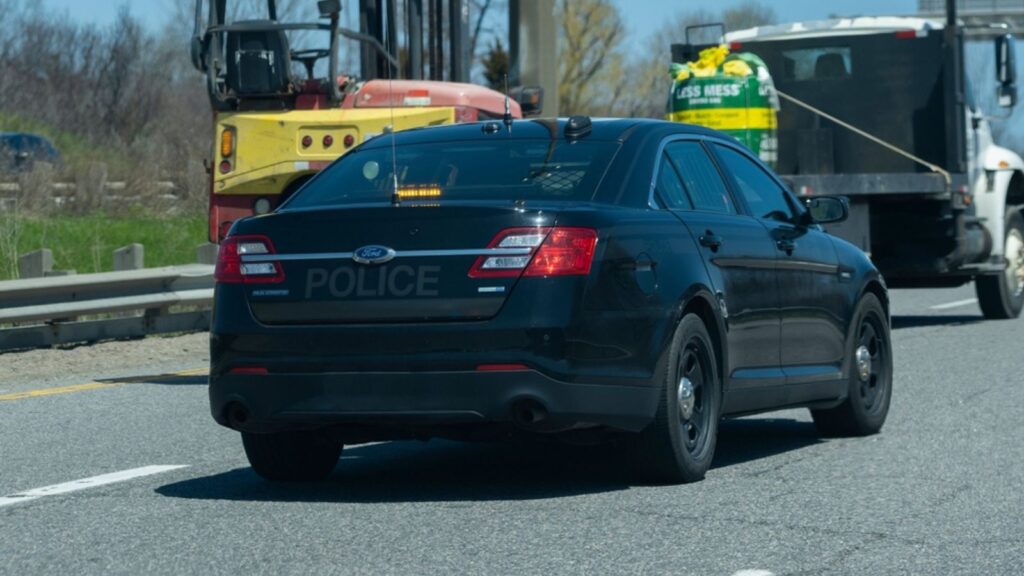
Sometimes, plainclothes police officers in unmarked police cars closely follow behind other vehicles. You might notice this happening over extended distances, which might seem strange if you don’t realize the vehicle doing the following might be an unmarked cop car.
Beware the Unmarked Police Cruisers

Again, you don’t have to live in paralyzing fear if you’re a law-abiding citizen. Even so, no one wants a ticket or, even worse, to lose demerit points that can increase car insurance premiums.
Knowing when a car on the road might be an unmarked police car can reduce the odds of you getting pulled over and ticketed.
More From Driver’s Drift

14 Cars That Consistently Fail Crash Tests

15 Reasons You Should Never Buy a Car in Cash (Even if You Can Afford to)

15 Things Boomers Taught Us About Cars Which are Totally Wrong Today
17 Hybrids to Avoid at All Costs


