
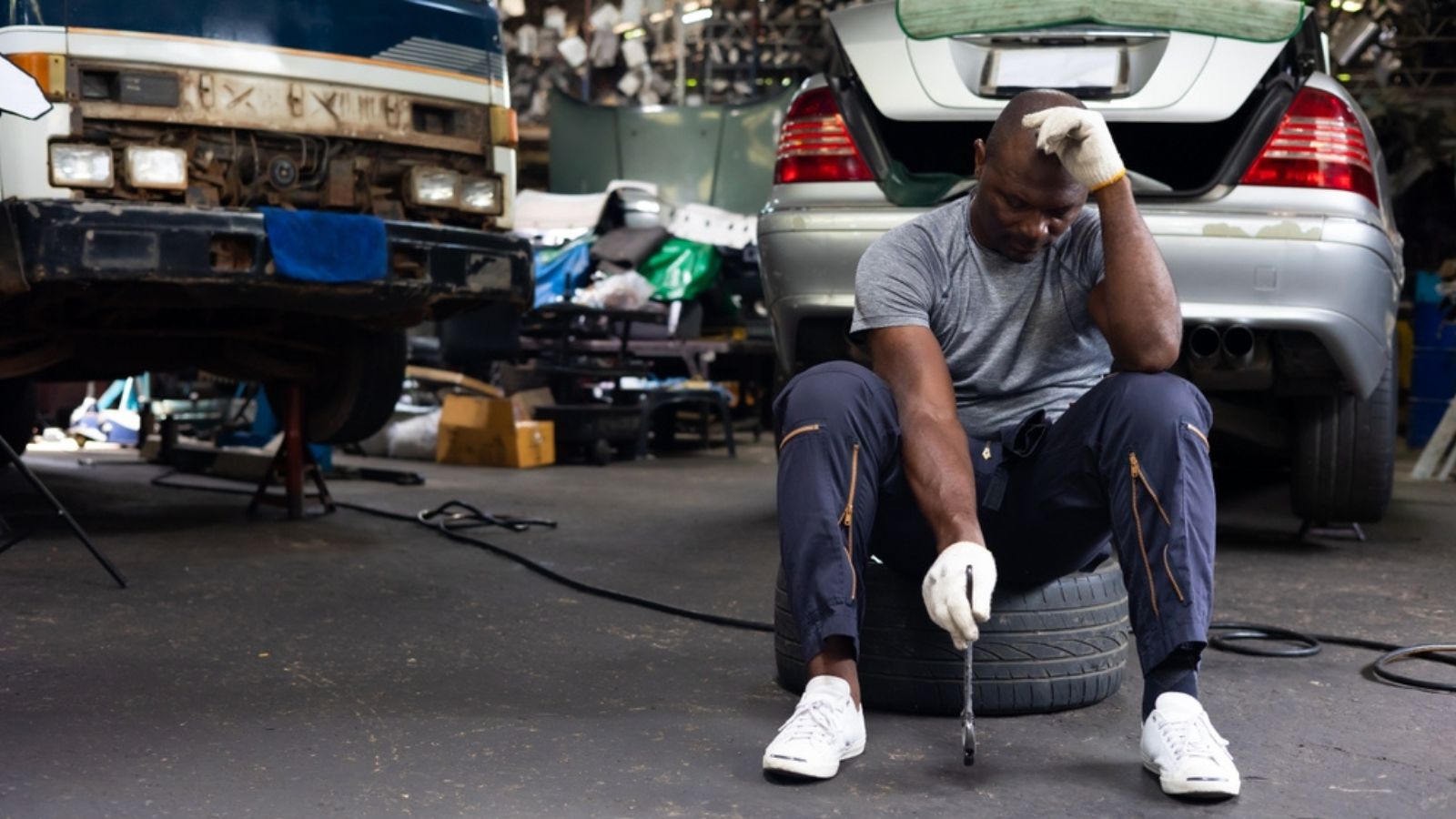
Car repairs can blow your budget fast. While most pressure falls on the car owner, some repairs are so complex that even mechanics hate them, costing you more due to their complexity and the skills required to fix them. Here are 16 expensive repairs that have been known to drive mechanics crazy, according to mechanics.
Engine Rebuild or Replacement

‘Major engine damage’ are three words you don’t want to hear as a car owner. This means the engine cannot operate and needs to be replaced or rebuilt. Engine replacement can cost anywhere from $4,000 for a four-cylinder to upwards of $10,000. As a result, many owners opt for rebuilding instead of replacement.
Engine rebuilding involves changing damaged cylinders, the crankshaft, and other vital components. While it may seem simple, it can be a complex task for mechanics as they must remove the entire engine from the bay to replace cylinders and other components. This requires precision, time, and attention to detail, as even small errors can lead to more significant problems.
Transmission Repair

The transmission system is responsible for receiving power from the engine and sending it to the wheels, enabling the car to move. This makes the transmission system essential as it can stop a car dead in its tracks.
Replacing the transmission assembly can cost between $4,000 and $5,000. Mechanics find this task challenging because transmissions are complex systems, especially automatic ones, with many moving parts, such as gears, valves, clutches, and solenoids.
Hybrid Car Batteries

Sure, these cars are very economical to run; however, they use big batteries that are expensive to replace.
Replacing one faulty hybrid car battery can cost up to $6,000. Considering that rechargeable batteries lose their ability to hold a charge over time, you’ll have to change yours at some point.
These batteries operate at a very high voltage, which poses serious safety risks if not handled correctly. Moreover, these battery systems are highly specialized and involve complex electronics, cooling systems, and integration with the vehicle’s computer systems. Mechanics must be well-versed in hybrid technology and follow strict safety protocols when replacing them.
Airbag System

Airbags are arguably the most significant safety invention in the automotive sector. However, once they deploy or begin to fail, they need replacement, and this task can be pricey.
The task is complex as the airbag system is connected to the steering wheel, and the steering system may also need repair alongside the airbags. That said, getting your airbag system back in proper working condition could cost around $2,500 to $4,000.
Mechanics also find this task challenging because airbag systems are critical safety features, and mistakes during repair cause significant liability issues.
Timing Belt/Chain Replacement

The timing belt or chain is a vital component that synchronizes the rotation of the crankshaft and camshaft so the engine’s valves open and close at the proper time. Mechanics may find timing belt or chain replacement challenging because they are typically located deep within the engine, requiring the removal of multiple components, such as the engine cover, accessories, and belts.
Changing the timing belt also requires a high level of precision and expertise because many modern cars have interference engines. Improper timing during a belt/chain failure can cause the valves to collide with the pistons, leading to expensive internal damage.
Suspension System Overhaul

A lot goes into the suspension because it keeps us from feeling every bump in the road. A proper working suspension system comprises shocks, struts, springs, control arms, and tie rods. If the whole suspension system fails, purchasing the parts and paying for the labor can be super expensive.
Mechanics often find suspension system overhauls challenging and less appealing than other repairs because they involve removing large, heavy parts, which can be physically demanding. After overhauling the suspension, the vehicle’s alignment must be reset to ensure proper handling and tire wear. Accurate alignment can be tricky, especially if worn parts affect suspension geometry.
Camshaft Replacement

Camshaft replacement is one of the more challenging and technical repairs in automotive work because it requires extensive engine disassembly. The camshaft is located deep within the cylinder head or above the block, and mechanics must remove multiple components, including the timing chain/belt, valve covers, rocker arms, and often the cylinder head itself, to access it.
Head Gasket Replacement

The head gasket seals the engine’s combustion chamber to build the appropriate compression. Additionally, it keeps coolant and oil from leaking, preventing your engine from overheating.
Coolant and oil spray into the combustion chamber when a head gasket is damaged. Replacing a head gasket can cost around $2,000, forcing mechanics to disassemble the engine by removing components like the intake manifold, exhaust manifold, and timing chain/belt to make repairs.
Catalytic Converter

All vehicles have a catalytic converter on the exhaust system to help convert harmful gases from the engine combustion chamber into less hazardous gases and water. This is vital in saving the environment because these gases can harm humans and the ecological system.
Catalytic converters are expensive because they contain precious metals like platinum, palladium, and rhodium, essential for chemical reactions that reduce harmful emissions. They generally cost $500 to $2500; and O2 sensors, which are installed in them, cost $200 to $600.
Thieves frequently target these components because of the valuable metals they contain. In many cases, customers bring their cars in after their converter has been stolen, which not only damages the exhaust system but can also create further issues with wiring and sensors.
Replacing a stolen converter may involve dealing with insurance claims, which can be time-consuming and frustrating for mechanics and customers.
Brake Line

It goes without saying that the brake system is essential for safety. While replacing simple parts like the brake pads is inexpensive, you may have to pay higher costs when the brake line that carries brake fluid blows. Most brake line repairs cost about $1,000 to $1500.
Mechanics must approach the brake line cautiously due to its complexity, safety risks, and potential for complications. Any mistake during replacement can result in brake failure, making this a high-stakes repair.
Electrical System Diagnostics and Repairs

Electrical issues can be notoriously tricky to diagnose, requiring advanced equipment. Tracking down the source of an issue is time-consuming and frustrating because modern vehicles are equipped with intricate electrical systems that control a wide range of functions. The complexity of these systems requires a thorough understanding of automotive electronics.
Air Conditioning System Repair

Air conditioning is a godsend during the summer months. If you’ve ever had an air conditioner failure in July or August, you understand how serious this can be.
Air compressors are more prone to damage because rods and valves tend to break. These components separate high and low-pressure air and allow Freon gas to cool the car.
Other parts, such as the engine belt, may also affect the compressor. Either way, it typically costs about $500 to replace; if you add more Freon gas, the cost can be even higher.
The complexity, specialized tools required, and potential complications make AC repair challenging for mechanics. Handling refrigerants, as they are hazardous materials, can also lead to environmental damage and potential safety risks, requiring additional training and compliance with regulations.
Fuel System Replacement

In most cases, fuel systems fail due to ethanol in the fuel, which attracts moisture and begins to form caramel around the fuel tank, lines, injectors, and the fuel pump. Replacing, cleaning, and flushing any or all of these could cost $1000 to $3000.
Your mechanic won’t be impressed, as smelling rotten gas all day isn’t pleasant. In addition, different vehicle makes and models have varying fuel system designs, leading to a wide range of potential problems. Mechanics must be familiar with the specifics of each system, which can complicate diagnostics and repairs.
Clutch Assembly Replacement

Mechanical vehicle clutches have several components, including the clutch disc, pressure plate, flywheel, release bearing, and master cylinders. Clutches engage and disengage two moving components of the driving mechanism. These components wear out gradually and need to be replaced.
Mechanics find clutch work challenging as they must remove the transmission. The reinstallation process requires careful alignment and torque specifications to ensure the clutch assembly functions correctly.
Water or Oil Pump Replacement

Water and oil pumps are beneficial for vehicle engine cooling and lubrication. Typically, these components last up to 50,000 to 100,000 miles before they need to be replaced. Sometimes, they wear earlier than expected due to driving conditions like dusty roads or the use of hard water for engine cooling.
Replacing a water or oil pump often requires specialized tools, such as torque wrenches, gasket scrapers, and pulley pullers. Accessing the pumps may also require removing other engine components or using lifting equipment to maneuver heavy parts safely, complicating the repair process.
Engine Control Module Replacement

The ECM continually monitors an extensive network of sensors around the car to ensure conditions are well within the standard operating range. Since it has several computer programs that enable it to monitor the systems and give feedback to the driver, it can be a complex device to replace.
Never Ignore Vehicle Maintenance or Repairs

Cars help us move from one point to another. Whether commuting for work or weekend travel with the family, these machines are fantastic. Unfortunately, complex car issues start as minor recurring problems. While some car owners ignore them until it’s too late, it’s essential to take action early. Failure to do so will only lead to more problems that drain your pockets.
More From Driver’s Drift

14 Cars That Consistently Fail Crash Tests

15 Reasons You Should Never Buy a Car in Cash (Even if You Can Afford to)

15 Things Boomers Taught Us About Cars Which are Totally Wrong Today

17 Hybrids to Avoid at All Costs


Peterson is an automotive content writer, blogger, and copywriter who is passionate about turning automotive experiences into compelling words. He developed an interest in cars at a young age and, upon reaching adulthood, mastered the ability to simplify complex automotive topics and present them engagingly.


