

Many want to make their vehicles stand out, sometimes modifying them with aftermarket products or accessories. However, some modifications are illegal and can result in your car being seized or traffic officers penalizing you.
Here are 16 common car modifications that can actually get you fined.
Extremely Dark Tints

Extremely dark tints can be obstructive to investigations and dangerous when driving, especially at night. Every state has window tint laws that dictate the percentage of tinting allowed on each vehicle window.
These state laws allow drivers to use window tint while keeping everyone around them safe. For instance, many states’ laws allow car owners to use a higher percentage of tinting on back windows and minimal on the front.
While dark tints prevent your car’s interior from turning into an oven and people on the outside from seeing who or what is inside the vehicle, they may attract a fine of around $150 to $500, depending on your state.
Loud Muffler Systems

It’s common among car enthusiasts, especially the youth, to have loud exhaust systems. Loud means more thrills, right? The engine roars, and the entire neighborhood knows about it.
All states in the U.S. have either banned or set rules to mitigate loud exhaust systems. The law requires you to use factory-fitted exhaust pipes because they come with mufflers that control the noise.
Therefore, installing aftermarket exhaust mufflers that may compromise these rules is illegal and can result in a fine of about $250.
Automatic License Plate Covers

There’s a uniqueness that comes with automatic license plate covers. While this may seem cool, it’s illegal because automated speed and red light cameras use license plate recognition technology to identify traffic law violators.
Obstructed plates can render these systems ineffective, which may land you in trouble. It’s always advisable to keep your license plates visible at all times. Failure to adhere to this law can result in monetary fines of $100 to $500. Additionally, you must surrender that cover or material.
Overly-Bright Headlights
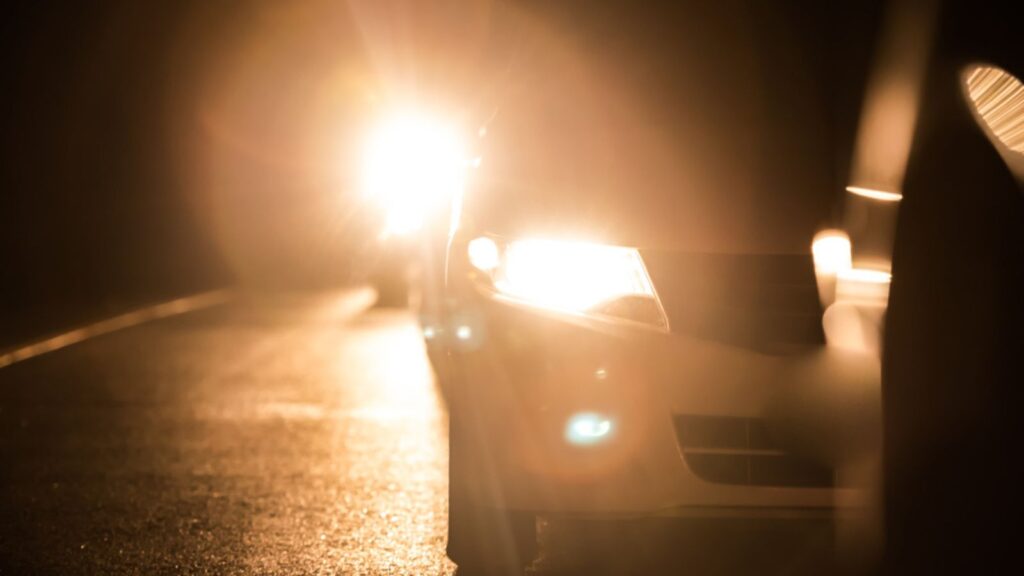
A car with extra powerful lights is a good thing on the road, especially for enthusiasts who love driving at night. While that might be the case for you, bright headlights, spotlights, and light bars aren’t allowed in many states because they pose more danger than just the thrills you’ll experience.
According to the Federal Code of Regulations, headlights must be between 500 and 3000 lumens. Failure to follow this rule can result in a fine of around $150 and two points on your driver’s license.
Red And Blue Lights

Lights are the most popular car modification in the United States. Although lightbars are illegal, they can still be used for off-roading and other instances.
Red or blue lights are completely prohibited on cars other than emergency vehicles, such as ambulances or law enforcement. If caught with red and blue light modifications, traffic officers will be hard on you, and it can attract a heavy fine of around $1,000, up to 1 year in prison, or both!
Laser Jammers
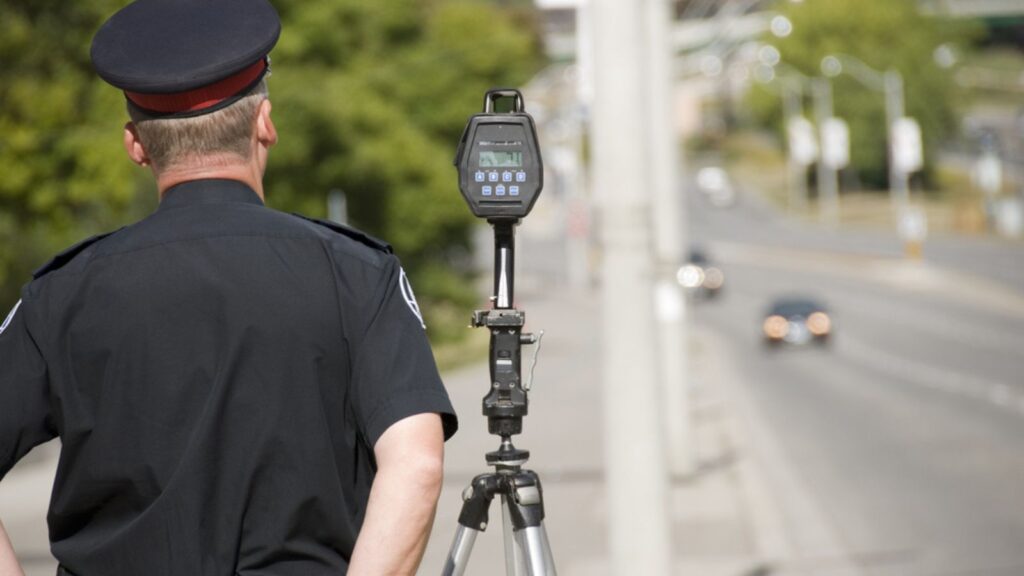
Laser Jammers work by transmitting invisible light sources back to the original police laser gun to confuse it. Laser devices used by traffic officers are much more direct and allow them to pinpoint a single vehicle more effectively. If drivers install laser jammers in their cars, the return signal confuses the laser gun such that it cannot “clock” the driver’s speed.
While laser jammers may be technically legal to buy in the U.S., many states will not allow you to use them on the road. The penalties for operating a laser jammer are not quite as severe as other offenses, but they can still be costly in some instances.
Lound Sound System

Sometimes, it is a pleasure to hear a car stereo so loud that it can be felt in the bones, especially on weekends or when you’re just done with your daily work. The problem is that it is also felt by the people a block away, leading to noise pollution.
Each local area has a noise ordinance that limits the sound a car stereo can produce, so check the laws before turning it on. Generally, the law states that if a car’s music can be heard from 25 feet away, it is a noncriminal traffic violation that can result in a fine of up to $114. Penalties can go higher depending on the area.
Rolling Coal

To roll coal, truck owners modify their engines to take in excess fuel and insufficient air. Without enough oxygen, the fuel can’t burn completely, causing sooty black particulates to come out of the tailpipe.
Rolling coal is a form of conspicuous air pollution used for entertainment or protest. While it may seem cool to roll coal, you can land in much trouble when caught by traffic law enforcers. Aside from the environmental damage, the concern for coal rolling is that black smoke impairs visibility, increasing the risk of motor vehicle crashes and violating clean air laws.
Turning your vehicle into a coal roller involves modifying it using smoke switches and smokestacks. Coal rolling can attract a fine of around $100 to $500, depending on your state.
A Lifted Truck

Off-roaders love lifted trucks because they are capable of handling tough terrains. For this reason, you may spot several lifted trucks on highways and city streets. Some owners also take great pride in customizing them to catch the attention of other road users.
The problem with this modification is that as the height of these trucks increases, so do the accident risks. To ensure safety, various states have defined several parameters. Regulations around dimensions typically relate to height, length, and width.
Other parameters include the suspension, bumpers, and frame. Whenever you need to make these modifications, consult the local state’s traffic department to ensure your compliance and safety.
Catalytic Converter Removal

Removing a catalytic converter without replacing it with a new one is against the law. Laws and regulations governing automobile emissions are in place to ensure that vehicles meet specific limits for harmful substances released into the air.
Catalytic converters play a crucial role in reducing these emissions. They convert harmful substances in a car’s exhaust gases—such as hydrocarbons, carbon monoxide, nitrogen dioxide, and nitric oxide—into less harmful emissions like carbon dioxide and water vapor through chemical reactions.
While some vehicle owners might be tempted to remove their catalytic converters for increased engine power, doing so can lead to significant legal consequences. If an inspection station detects that the catalytic converter has been tampered with or removed, the owner could face fines of up to $10,000.
Use of Nitrous

The injection of nitrous oxide into an engine means that more oxygen is available during combustion. More oxygen means the car system will inject more fuel to match the ratio for better combustion, allowing the same engine to produce more power. This can give you an advantage during the quarter-mile tracks.
While this may be allowed on track races, many people have nitrous in their cars as they drive on the streets – and this is illegal. NOS is extremely dangerous when combusted in an uncontrolled environment.
Stickers and Decals

Although stickers are a fun way to personalize your car, there are some legal limitations to their use. The highway code states that a driver’s windscreen must be clear of obstructions that interfere with vision.
Also, any excessive window sticker, whether too large or incorrectly placed, can obstruct or impair the driver’s view. If the item covers your license plate, headlights, or tail lights, it can also land you in trouble.
The law also bans anything so distracting to other road users that it causes a traffic hazard. The fine for violating these rules can be up to $200.
Fancy and Loud Horns

The sound levels of typical car horns are subject to legal regulations as part of roadworthiness requirements. Most states have specific rules governing the sound levels that car horns must meet, which manufacturers adhere to when designing their vehicles. This is often not the case with aftermarket modifications, which may not comply with these regulations.
Additionally, the law mandates that horns be used responsibly, ensuring they are honked in a manner that does not distract or disturb other drivers. These regulations are essential not only for maintaining road safety but also for minimizing excessive noise pollution in our communities.
Cold Air Intakes
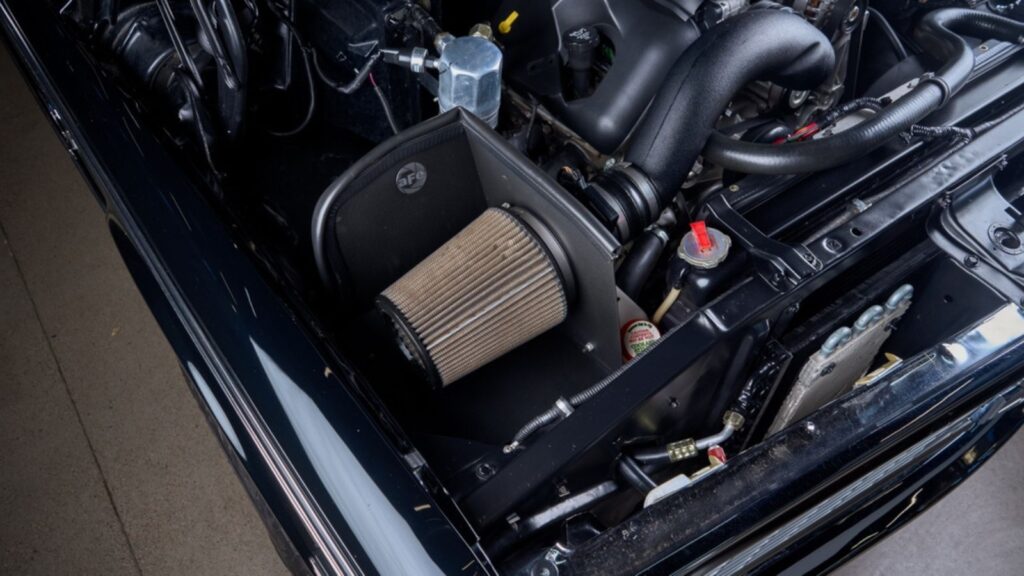
Cold air intake systems are one of the most common aftermarket upgrades for those who want to improve their vehicle’s power and performance. Installing one in your ride usually means more horsepower from the engine, resulting in more thrills and fun.
While these upgrades may not be illegal in some states, it’s good to consult with the state regulatory authorities before installing one. Federal law requires each unit to have a CARB Executive Order (EO) number issued to the aftermarket equipment manufacturer.
Underbody Neon Lights

Under-body neon lights may look cool to some, but unfortunately, they are so cool that they distract other drivers on the road. The added glow can cause vision problems, resulting in crashes. Several states have completely banned underglow modifications while others have restrictions, so ensure you comply with your local state rules.
Metal-Studded Tires

Studded tires may be legal in many places, especially where the winter season could turn those areas into difficult driving terrains. These tires are great for safety, but when it’s not snowing, and the roads are clear, they can destroy tarmac and road surfaces.
Some states allow metal studs at any time, while others have set rules on when and where to use them. So, ensure you comply with the law to avoid fines.
Always Follow Federal and Local States Traffic Laws

The above are some illegal car modifications that you should avoid making. If you make any other changes to your vehicle, such as changing the color, changing the engine, or fitting an alternative fuel kit, consult the Federal or local state to ensure you’re safe.
More From Driver’s Drift

17 Cars That Are Incredibly Fun to Drive

13 SUVs with the Most Luxurious Interiors

13 Cars Owners Wish They’d Never Purchased

16 Reasons Why Some Americans Will Never Embrace Electric Vehicles


Peterson is an automotive content writer, blogger, and copywriter who is passionate about turning automotive experiences into compelling words. He developed an interest in cars at a young age and, upon reaching adulthood, mastered the ability to simplify complex automotive topics and present them engagingly.


