

Most people know that car ownership goes far beyond the purchase price. Upkeep, fuel, insurance, and more are all part of the equation.
According to Bankrate, people spent an average of $12,182 last year owning and operating a new vehicle, which is up $1,454 year over year. Bankrate adds that motorists in 2023 averaged 9.83 cents per mile for repairs, maintenance, and tire replacement. This estimate is based on 15,000 miles driven annually.
Ignoring Repairs Isn’t the Right Move

Some car owners delay or ignore car repairs because of the expense, but for obvious reasons, that’s not the right way to go. Failing to maintain and repair your vehicle will lead to more costly problems and might even shorten its lifespan. So, dragging your feet on repairs is a no-no.
A Mechanic’s Hourly Fee Can Add Up

Considering that most mechanics charge an hourly fee between $75 and $130, you can imagine how the costs can add up. One source says replacing an engine can take between 10 and 12 hours. Multiplying $130 by 12 hours to replace an engine equals $1,560.
And that’s just for the mechanic’s time. You still have to factor in the cost of the engine, which can be between $5,000 to $10,000. That’s a small fortune.
DIY Only When You Can
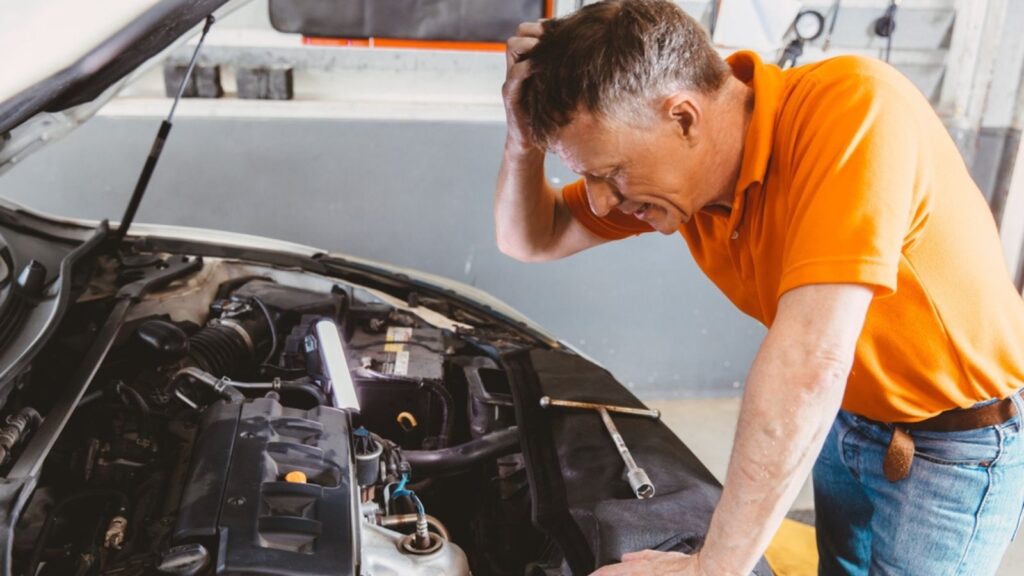
While there are some easy DIY repairs that just about anyone can do, the word “easy” is subjective. What might be easy for you might be a head-scratcher for someone else. The amount of time you have, your tool collection, and your desire to tackle a project will factor into whether you DIY or book an appointment with your local auto mechanic.
DIY Car Repair Is About More Than Saving Money
While you can save money with DIY car repair, it’s about more than saving money. You’ll have great personal satisfaction when you learn to troubleshoot and do repairs independently.
It’s no fun to depend on someone else to repair your car. Learning how to do stuff independently will make you a happier car owner.
That said, here are 11 DIY repairs and maintenance anyone can do without spending a fortune at a car repair facility.
Fixing a Flat

A flat tire can ruin anyone’s day. The good news is that you can quickly fix the problem if you’re prepared.
If you find the source of the leak—as long as the puncture isn’t on the tread wall—you can perform an effective repair using tire plugs. J.D. Power says a tire plug can last as long as 25,000 miles.
Some people swear such a fix is permanent. But even if it isn’t, you probably won’t have to replace the tire anytime soon.
Change Engine Oil

Learning to change your own oil can save you a lot of money over the life of your vehicle. Get a jack and jack stands, a container to capture old oil, new engine oil, an oil filter, and the right tool to remove the bolt to expel the old oil. Check your owner’s manual for oil-changing tips.
Check and Top Off Fluids

Another maintenance task you can do independently is checking and topping off fluids under the hood. Whether you’re checking brake fluid, transmission oil, engine oil, power steering fluid, or any other fluid, periodically checking and topping off fluids can save you a ton of grief.
Doing so will also alert you sooner than might otherwise be the case if there’s a leak somewhere.
Replace Wiper Blades

One rule of thumb is to replace your wipe blades twice yearly or every six months. But that’s a general rule since more frequent replacement might be necessary depending on any extreme weather conditions you face. And, you guessed it, replacing the wiper blades is easy.
Change Air Filter

Another super-easy DIY maintenance task is replacing the air filter. Find the location by consulting your owner’s manual. You will be surprised at how easy this task is to execute.
Change Spark Plugs

Are you encountering engine problems like misfirings or decreased fuel efficiency? A cheap engine repair involves changing the spark plugs. Check the owner’s manual to find out what spark plugs to buy, how to swap out the old ones with new ones, and what torque specs to use.
Replace Brakes

Servicing and replacing the brakes will take more work. You may need to replace the rotors, calipers, brake pads, and more. While it’s a straightforward process, you shouldn’t attempt it unless you have the tools, skills, and time to do it right.
Ensure you understand how to remove all the air from the brake lines if you are doing a complete brake change. You can get tools to perform this important function alone or with help.
Check Suspension and Shocks

Periodically checking your suspension is a good idea. Learn about the components and how to tell if something is on its way out or has failed. Once you learn the procedure and have the right tools, the shocks are usually not that difficult to replace.
But after changing the shocks or struts, you may need to go to a mechanic for an alignment so your tires don’t wear out prematurely and you experience better handling and ride quality.
Small Windshield Cracks

If your windshield has small cracks, you can fix it yourself using a DIY kit. This can stop the cracks from spreading and make your windshield look brand new.
Repair Minor Dents

You don’t have to run to the body shop every time your car gets a dent. You can use reasonably priced DIY dent repair kits to slay minor dents, saving you a ton.
Fix Minor Paint Scratches

Rust can wreak havoc on your vehicle, so repairing minor paint scratches independently makes sense. You’ll pay for an arm and a leg if you hire someone to do it at a body shop. But you can touch up minor scratches cheaply to safeguard against rust.
DIY Car Repair Is the Way to Go

It pays to be more hands-on with your vehicle. By learning to wrench on your car, you’ll know the job was done right. Remember that it’s a process. Not everyone grew up helping maintain and repair the family car under the tutelage of a family member or friend.
If you’re starting from scratch without DIY car repair know-how, begin with simple projects. You’ll gain more experience with each project, grow your skillset, and develop the ability to tackle more complex repairs.
More From Driver’s Drift

15 Easy-to-Miss Signs of Unmarked Cop Vehicles You Should Know About

15 Best-Looking SUVS On the Market Today

16 Reliable Vehicles That Seldom Need a Trip to the Repair Shop

15 Continuously Variable Transmissions (CVT) Cars That Are Worth Your Investment


