

You may not think much about cargo space when determining the car you want to buy, but you will need it at some point in your car ownership experience. Many car buyers rush to purchase flashy vehicles with tiny cargo areas because they look good, only to regret doing so shortly after.
Practicality is an essential part of vehicle ownership, so if you aren’t getting the practicality you need from your current vehicle, you are likely to replace it or buy another one that offers that practicality you seek.
SUVs should offer plenty of cargo space, but not all do. Here are 15 SUVs with the most cargo space, counting down from the one with the most space.
Jeep Grand Wagoneer

The Jeep Grand Wagoneer is a large, 3-row luxury SUV that appeals to people who prioritize space, luxury, off-road capability, and premium features. As Jeep’s flagship luxury SUV, it comes with all the bells and whistles that Jeep can throw at it, like standard heated and ventilated front seats with massage functions, standard adaptive air suspension, retractable running boards, and much more. When its second and third-row seats are folded down, this SUV offers 112.9 cubic feet of cargo space.
Jeep Grand Wagoneer
The Jeep Grand Wagoneer is a large, 3-row luxury SUV that appeals to people who prioritize space, luxury, off-road capability, and premium features. As Jeep’s flagship luxury SUV, it comes with all the bells and whistles that Jeep can throw at it, like standard heated and ventilated front seats with massage functions, standard adaptive air suspension, retractable running boards, and much more. When its second and third-row seats are folded down, this SUV offers 112.9 cubic feet of cargo space.
Nissan Armada
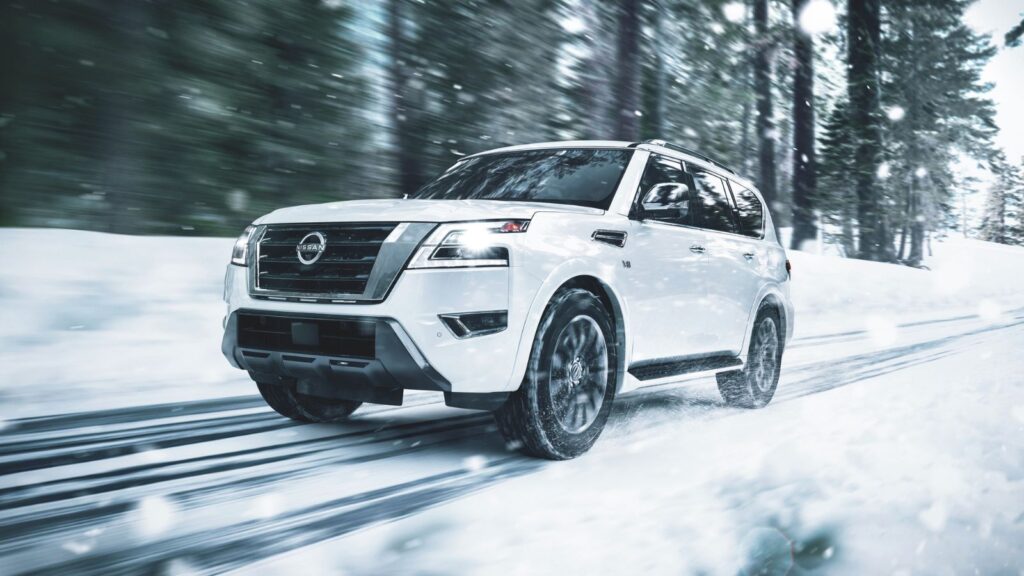
The Nissan Armada started as a utilitarian full-size SUV based on the Nissan Titan full-size pickup but has evolved into a highly rated luxobarge with off-road chops. Its plenty of cargo space is a bonus.
This SUV, closely related to the Nissan Patrol SUV sold in other markets, spans 208.9 inches long and seats up to eight passengers. Under its hood, it features a 400hp 5.6L V8 engine paired with 7-speed automatic transmission. Behind its 3rd-row seats, this SUV offers 16.5 cubic feet of cargo space. When you fold down its 2nd and 3rd-row seats, that space increases to 95.4 cubic feet.
Volkswagen Atlas
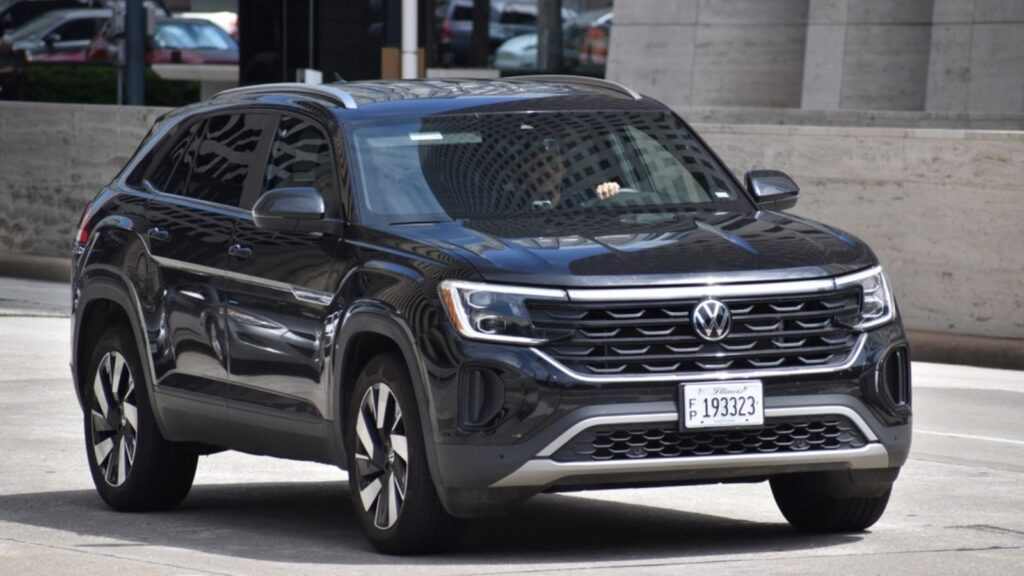
The Volkswagen Atlas, also called the Volkswagen Teramont, is positioned above the Tiguan in Volkswagen’s SUV hierarchy. This SUV has unibody construction, so its driving dynamics are more car-like. Its large cabin can carry up to seven passengers, offering ample seating space in all three rows.
Until 2023, the Atlas had a 235-hp 2.0L four-cylinder or a 276-hp 3.6L V-6 engine. For 2024 and beyond, Volkswagen has replaced those engines with a more refined 269-hp turbocharged 2.0-liter four-cylinder engine. The Atlas offers 20.6 cubic feet of cargo space at the back when all the seats are up. When you fold down the 3rd-row seats, that space increases to 55.5 cubic feet. For maximum cargo space, fold down both the 2nd and 3rd-row seats; doing so avails 96.8 cubic feet of cargo space.
Lexus TX
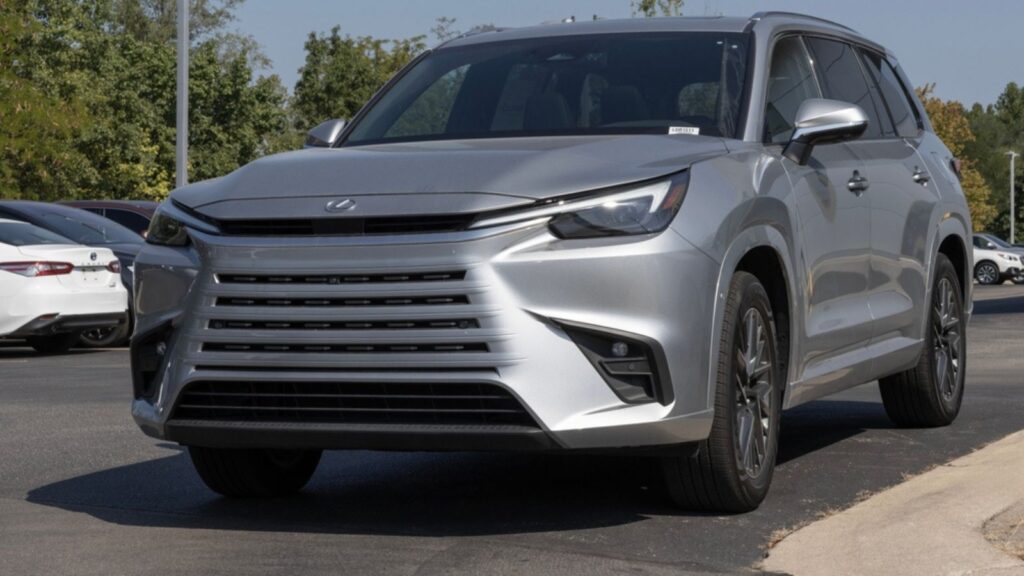
The Lexus TX is an all-new, 3-row, midsize crossover SUV that replaces the Lexus RX L, a long-wheelbase version of the popular Lexus RX. The TX shares a platform with the Toyota Grand Highlander and is just two inches shorter than the full-size, body-on-frame Lexus LX. This SUV offers plenty of space for cargo thanks to its platform – 20.1 cubic feet behind the 3rd row and 97 cubic feet when the 2nd- and 3rd-row seats are folded down. The TX also offers a supple ride, a well-appointed interior, and ample space for adults in all three rows.
Buick Enclave

The Buick Enclave is an upscale, stylish, midsize crossover SUV that shares its platform with the Chevrolet Traverse. It is one of the biggest SUVs in its segment, measuring 204.3 inches in length and 78.8 inches in width. Inside, it offers 157.3 cubic feet of passenger volume and legroom dimensions of 41.2, 38.3, and 33.5 inches in the 1st, 2nd, and 3rd rows; thus, adults can sit in all three rows. Behind the 3rd-row seats, it offers 23.6 cubic feet of cargo space. A maximum cargo capacity of 97.4 cubic feet is available when the 2nd- and 3rd-row seats are folded down.
Toyota Grand Highlander

Introduced in 2023, the Toyota Grand Highlander was Toyota’s answer to the demand for a larger, more family-oriented midsize SUV. It is longer, taller, and broader than the Toyota Highlander it replaces, benefitting from the same platform upon which the Lexus TX is built. This SUV offers 20.6 cubic feet of cargo space when all the seats are up and 97.5 cubic feet of cargo space behind the front seats (when the 2nd- and 3rd-row seats are folded down).
Chevrolet Traverse

The Chevrolet Traverse offers an ideal balance between value and affordability. This 8-passenger midsize crossover SUV is one of the roomiest in its segment. It also provides an intriguing list of standard features, including heated front seats, a heated steering wheel, tri-zone climate control, a 17.7-inch touchscreen system with Android Auto and Apple CarPlay compatibility, and much more. At the back, this SUV offers 23 cubic feet of space for cargo when the seats are up and up to 98 cubic feet when the 2nd- and 3rd-row seats are folded down.
Rivian R1S
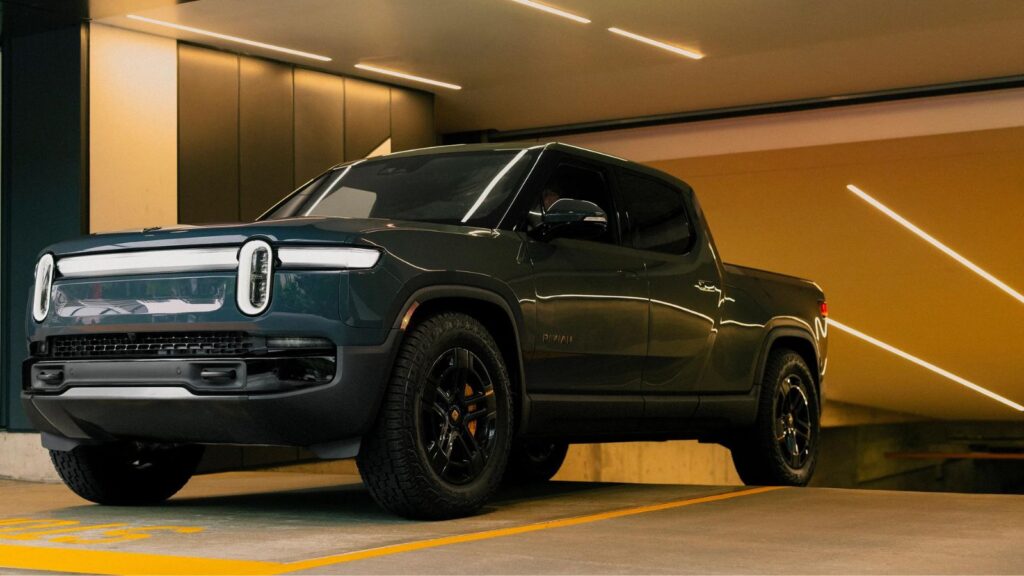
The Rivian R1S is an all-electric, full-size luxury SUV that offers up to 104.7 cubic feet of cargo space when its 2nd- and 3rd-row seats are folded. Owing to the 135kWh liquid-cooled battery pack it carries, this boxy yet stylish SUV tips the scales at 7,068 pounds. However, its quad-motor models can accelerate from zero to 60 mph in up to 2.6 seconds despite that fact. The Rivian R1S can carry up to seven passengers and offers a luxurious interior with a panoramic sunroof, vegan leather upholstery, and a premium Median sound system.
Lincoln Navigator and Navigator L
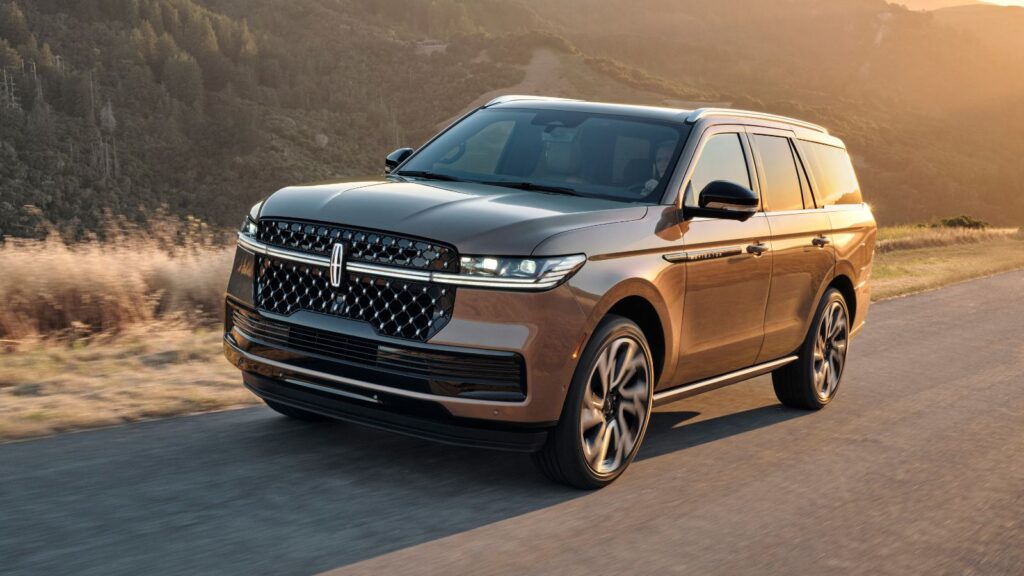
Thanks to its robust construction and 440hp twin-turbocharged V6 engine, the long-running, full-size, body-on-frame Lincoln Navigator can tow up to 8,700 pounds. Inside, it offers an incredibly spacious cabin that seats up to eight passengers, leaving 19.3 cubic feet of storage space at the back. When the 2nd and 3rd-row seats are not in use, you can fold them down to avail up to 103.3 cubic feet of total rear cargo space. The Lincoln Navigator L (the extended-wheelbase version of this SUV) offers even more maximum cargo space – 120.2 cubic feet.
Ford Expedition and Expedition Max

The Ford Expedition is Ford’s most significant SUV offering. It is also more affordable than many of the full-size SUVs on the market. It has been in production for over two decades, and Ford has kept its winning formula – body-on-frame construction and front-engine, RWD/4WD body layout.
Under the hood, this SUV features a twin-turbocharged 3.5L V6 engine that develops between 380hp and 440hp depending on the trim level. Regarding cargo space, this SUV offers up to 104.6 cubic feet behind the front row in the standard models. The Expedition Max cranks up that max cargo space to 121.5 cubic feet.
Chevrolet Tahoe

The Chevrolet Tahoe full-size, body-on-frame SUV blends capability with style, refinement, and off-road prowess. It is closely related to the GMC Yukon and features similar powertrains. The Tahoe is one of the most giant SUVs in its segment, standing 210.7 inches long and 81.1 inches wide. These substantial proportions translate to tons of passenger and cargo space inside. It can carry up to nine passengers when equipped with a first-row seat bench. For cargo, it offers 122.9 cubic feet of space behind the front-row seats (when the 2nd and 3rd-row seats are folded down).
Jeep Wagoneer

The Jeep Wagoneer is priced lower than the Jeep Grand Wagoneer, competing directly against the Chevrolet Tahoe, GMC Yukon, and Ford Expedition. For 2024, it boasts a 420hp turbocharged 3.0-liter six-cylinder engine that delivers brisk acceleration and tows up to 10,000 pounds.
Like the Grand Wagoneer, it offers a massive interior that accommodates up to eight passengers. Its standard-wheelbase models also offer up to 116.7 cubic feet of cargo space behind the front seats, and its long-wheelbase models offer even more space—130.9 cubic feet.
Cadillac Escalade and Escalade ESV

The current generation of the Cadillac Escalade full-size luxury SUV (internally referred to as the GM T1UL at General Motors) is the largest one yet. Its standard-wheelbase version is 211.9 inches long and 81 inches wide, while its extended-wheelbase version (the Escalade ESV) is 227 inches and 81.1 inches wide.
The standard Escalade offers 121 cubic feet of storage space when its 2nd and 3rd-row seats are folded down, while the Escalade ESV offers an impressive 142.8 cubic feet of space when similarly configured.
GMC Yukon and Yukon XL

The premium GMC Yukon full-size SUV is mechanically identical to the Chevrolet Tahoe. It offers regal styling, solid off-road capability, noteworthy performance, upscale features, advanced technology, and an impressive maximum towing capacity of 8,400 pounds. Regarding cargo space, the standard-wheelbase Yukon offers 122.9 cubic feet of space when the 2nd and 3rd-row seats are folded down. Thanks to its large proportions, the extended-wheelbase Yukon XL provides up to 144.7 cubic feet.
Chevrolet Suburban

Like the Yukon XL, the Chevrolet Suburban offers up to 144.7 cubic feet of cargo space when appropriately configured. This SUV also excels in the quality department, having bagged the “Best Large SUV for Families” award by U.S. News & World Report for four consecutive years. In addition, you can have it equipped with a fuel-efficient 3.0-liter Duramax turbo-diesel inline-6 engine that delivers adequate performance. The Suburban can carry up to nine passengers, and adults sit comfortably in all three rows.
Do You Need a Car That Offers More Cargo Space?

If you intend to haul cargo regularly or if the cargo you want to haul is heavy, you will do well to choose SUVs with body-on-frame construction. They are tougher and sturdier than those with unibody construction, so they are better suited for cargo-hauling tasks. Be careful not to exceed the SUV’s maximum payload capacity to avoid increased wear and tear on your tires and suspension components. Also, try to balance the load by distributing the weight of the cargo in your SUV’s cargo area.
More From Driver’s Drift

17 Cars That Are Incredibly Fun to Drive

13 SUVs with the Most Luxurious Interiors

13 Cars Owners Wish They’d Never Purchased

16 Reasons Why Some Americans Will Never Embrace Electric Vehicles


Mark Muhoro is a car enthusiast and writer who loves everything about automobiles. With over 11 years of experience in the automotive industry, Mark has become an expert in how cars work and what makes them special. He writes clear and interesting articles about cars for magazines and websites, making valuable contributions to renowned platforms like Vroom Magazine, Internet Brands, and Contentmotive.


