

Did you know that the average fuel economy for cars and light trucks in the U.S. for 2021 was 24.4 MPG and 17.8 MPG, respectively? So, if you’re doing better than average, consider yourself fortunate. But if you’re getting less than average, that might be a problem of wallet-draining proportions.
According to statistics published on LendingTree in November 2024, Hawaii has the highest gas costs at $4.58 per gallon, California at $4.49 per gallon, and Washington at $4.00 per gallon. So, where you live will greatly impact the ransom you’re forced to pay to keep your car chugging along.
What You Drive Is a Big Determiner of MPG

Your vehicle type should give you an idea of the MPG you can expect under normal circumstances. But what should you do when the fuel economy drops, and you’re unsure why?
Here are 15 reasons your fuel economy is declining and forcing you to spend more time and money at the gas station.
Dirty or Clogged Air Filter

One reason your vehicle might not get the expected MPG is a clogged or dirty air filter. AutoZone recommends changing your car’s air filter every year or 12,000 miles. But, as always, consult your owner’s manual.
If you ignore this vital maintenance task, a dirty or clogged air filter will lessen airflow to the engine, cause inefficient combustion, and lower MPG.
Underinflated Tires

Remember that your tires are the only things connecting your car to the road, so tire safety is essential. Underinflated tires can reduce fuel efficiency in addition to fast-tracking wear and tear and increasing the possibility of blowouts.
Your vehicle’s engine will have to work harder and consume more fuel. The source adds that you can increase your vehicle’s mileage by as much as 3% if the tires are at the correct pressure.
Misaligned Wheels

Getting the alignment checked annually or every other oil change is vital. If you fail to get alignments as needed, premature tire wear and tear will force your vehicle to work harder and use more fuel.
Old or Faulty Spark Plugs
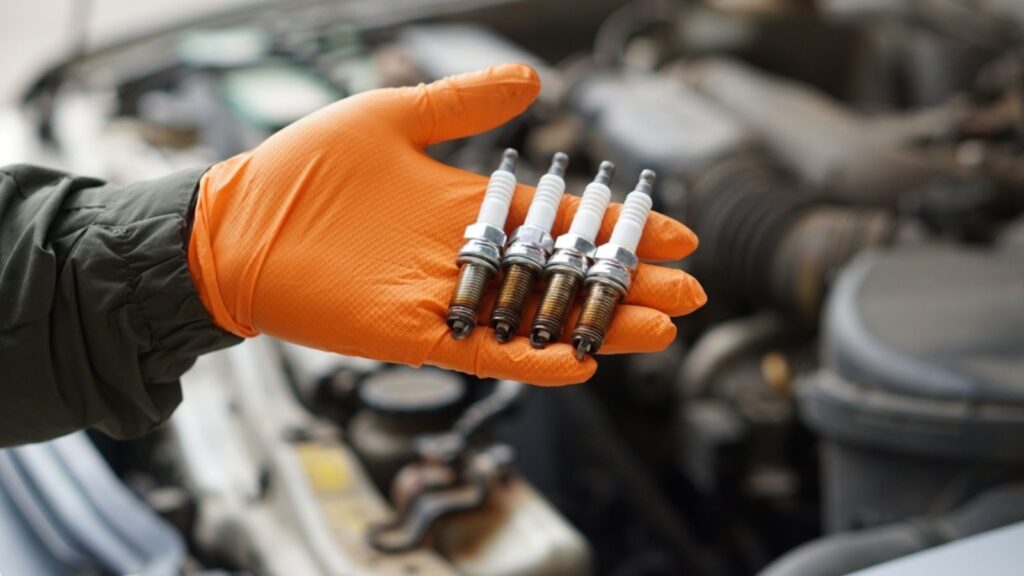
You can avoid many issues by checking the owner’s manual to see when to perform routine maintenance. That includes changing spark plugs and ignition coils as needed. If these components wear out, they could cause incomplete combustion, which wastes fuel and lowers MPG.
Failing Oxygen Sensor

Your vehicle’s oxygen sensor measures the amount of oxygen in the exhaust system and helps achieve the right air-fuel ratio for ideal engine performance. If yours goes bad, you might get erroneous air-fuel ratio readings and experience reduced gas mileage.
Malfunctioning Fuel Injectors

If your fuel injectors malfunction, they can cause poor combustion or waste gas. Signs of fuel injector issues include engine misfires, rough idling, and lower gas mileage. If this issue rears its ugly head, a trip to your mechanic is a good idea.
Low Transmission Fluid

It’s a good idea to check transmission fluid levels periodically, as low transmission fluid will boost friction in the transmission and may reduce efficiency. If your MPG is going down unexpectedly, check your transmission fluid level and top it up if necessary.
Dirty Engine Oil

It goes without saying that changing the engine oil at regular intervals is essential if you want your car’s engine to last. If, for whatever reason, you fall behind on oil changes and the oil gets dark and dirty, that can negatively impact fuel efficiency.
Aggressive Driving

Aggressive driving will do a number on fuel efficiency, too. One source says aggressive driving can reduce gas mileage by 15% and 30%. If you value your money, let up on the accelerator pedal. Driving like a maniac won’t just make the roads unsafe but also reduce your MPG.
Excessive Idling

Consider that idling a passenger car can waste between 0.2 and 0.5 gallons of gas per hour. So, if you have developed a habit of idling, you’re wasting fuel and will see your MPG decline. Many modern cars, fortunately, are equipped with stop/start systems that allow the engine to be shut off rather than idling.
Frequent Short Trips

A car’s engine will take some time to get up to its optimal operating temperature from a cold start, so it will tend to burn more fuel until it reaches that window. Consequently, frequent short trips where the engine does not have time to get to its ideal operating temperature can reduce fuel efficiency, which means you’ll be going to the gas pump more than you want.
Overloading the Vehicle

A recent study suggests that weight plays a significant role in fuel consumption in cars. It suggests that drivers can achieve fuel savings of about 0.1 gallon per 60 miles per 220 lb reduction in weight.
If you’re concerned about fuel economy but have a ton of stuff in the trunk, consider getting rid of it.
Using Air Conditioning Excessively

Running your car’s air conditioner non-stop can cut fuel economy by as much as 25%, and that’s even more the case on short trips. Open your windows as an alternative to relying too heavily on your vehicle’s AC.
Tailgating

According to one source, rear-end accidents comprise around 23% of all car accidents. Tailgaters have to smash on the brakes and accelerate to do what they do so well … drive too closely behind other vehicles. That’ll increase the odds of accidents and take a toll on fuel economy.
Aging Engine

If your engine is at the end of its lifecycle, the fuel economy numbers could take a nosedive. Wear and tear is normal over time, but you can slow that down with regular oil changes and preventative maintenance.
Lower MPG Can Be the Result of Many Different Things

It can be frustrating if you notice your car’s MPG declining and don’t know why. If this happens to you, see if any of these 15 reasons might be behind the lower fuel efficiency. You may want to take your car to a mechanic if you are unable to troubleshoot your way to a solution that solves your lower-fuel-economy woes.
More From Driver’s Drift

13 Phrases Mechanics Use to Up Your Repair Bill

13 SUVs Owners Say They Wish They Never Bought

15 Vehicles With Blind Spots So Bad You’ll Wonder Why They Even Have Windows

15 Easy-to-Miss Signs of Unmarked Cop Vehicles You Should Know About


