

If you want your vehicle to last, proper maintenance at the right intervals is a must.
The owner’s manual in your car’s glove compartment is your best friend. It details routine maintenance so you can DIY or take it to a mechanic. Failing to perform proper upkeep will ultimately lead to costly repairs that drain your wallet.
But here’s the thing. Not all maintenance recommended by your auto mechanic is necessary. Some of these items, while possibly helpful, aren’t required. If you want to take care of your ride without spending money on needless “maintenance” services, be wary of these 16 services.
Air Filter Replacement

It’s typically unnecessary to change your air filter as often as some mechanics recommend. Do you need to replace it with each oil change? Nope. Depending on the vehicle maker, the recommended change interval for air filters is the 12,000 to 15,000-mile range.
If you’re changing your filter every 5,000 miles or so, it’s overkill. While it’s a good idea to check the air filter during an oil change, replacing it at those intervals is optional.
Windshield Wiper Change

Some sources recommend changing your windshield wiper blades twice annually or every six months. So, if you recently changed yours, there should be no need to swap them prematurely. The only exception is if a mechanic you know and trust recommends swapping to wipers that’ll better handle winter weather.
Transmission Fluid Flush

According to one source, vehicle makers suggest getting automatic transmissions flushed once every 30,000 to 100,000 miles and manual transmissions flushed once every 30,000 to 60,000 miles.
However, some automakers don’t recommend transmission flushes at all. Keep this information in mind so you know how to respond if your mechanic recommends a transmission fluid flush.
Engine Flushes

Engine flushes are usually unnecessary unless your engine is in bad shape. If it is, your auto mechanic might recommend a flush to help dislodge deposits and dissolve sludge so your motor performs better and lasts longer.
That said, an engine flush could be disastrous for a high-mileage older engine because the sludge might be the only thing preventing the engine oil from getting through worn and torn seals.
Spark Plug Replacement

While it’s always best to go with the vehicle maker’s recommendation, a good rule of thumb is to replace your car’s spark plugs every 100,000 miles of driving.
Sometimes, you may need to change them sooner—if your engine is misfiring, for example— but you usually can adhere to the intervals in the owner’s manual. So, you can likely skip this service if your mechanic recommends it before the interval the automaker recommends.
Premium Oil

Unless the owner’s manual recommends premium oil, the only person benefiting from your choice is the mechanic changing your oil. You’ll be paying more for something you don’t need. Regular-grade motor oil is acceptable for your car unless the owner’s manual says otherwise.
Power Steering Fluid Flushes

A rule of thumb is to replace the power steering fluid in your vehicle every 40,000 miles to 80,000 miles. But, as always, check your owner’s manual. That way, you can refuse this service if it’s not in line with what’s required.
Battery Replacement

It’s usually necessary to replace your vehicle’s battery every four or five years. Be wary if your auto mechanic recommends a faster battery swap. A professional will run some tests to determine the health of your battery and charging system before making any recommendations.
Fuel Additives

Whether fuel additives work or not is still up for debate. While some believe they’re a godsend for engines, others say there’s insufficient data to say whether or not they do what they claim.
Considering that fuels available at gas stations have sufficient additives and detergents, you may want to pass on fuel additives if your auto mechanic recommends them.
Differential Fluid Change

One source recommends replacing the differential fluid every 30,000 miles to 60,000 miles. Your owner’s manual may suggest otherwise, but getting it done sooner than necessary will lighten your wallet without offering any measurable benefit.
Air Conditioning Service

Unless it’s acting up and causing issues, your car’s AC system should be serviced only once or twice annually. You could be spending unnecessarily for AC servicing if the system is working just fine.
Wheel Alignment

While a wheel alignment is often recommended after getting certain repairs done, some mechanics will take your vehicle for a test drive after the work is done to determine whether an alignment is even necessary.
An alignment isn’t typically required unless the vehicle pulls to one side or the other as it’s driven straight down the street.
Coolant Replacement

Coolant is fundamental in keeping your vehicle’s engine from overheating. So, don’t underestimate its importance. Depending on your car, the coolant flush interval will likely be between 30,000 miles and 100,000 miles. Check your owner’s manual for the specifics. Don’t get this maintenance service done prematurely and unnecessarily.
Fuel System Cleaning
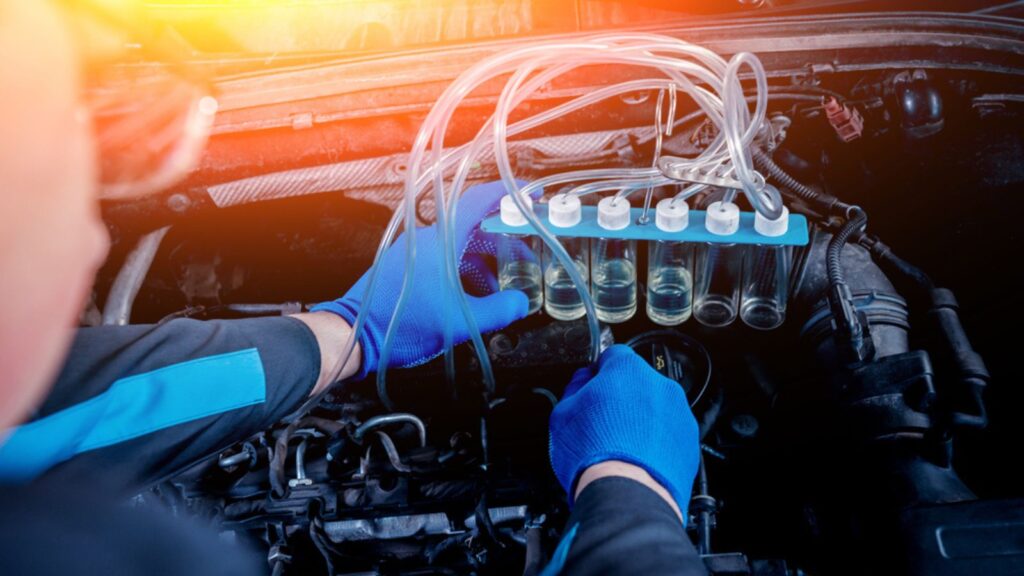
One source recommends getting your car’s fuel system cleaned annually or every 12,000 miles—whichever comes first. If you take your vehicle to a mechanic because of driveability issues, the automotive pro will conduct tests to get to the bottom of the matter.
And that might very well uncover an issue with the fuel system—one that requires cleaning. Otherwise, it’s not a service you need to worry about often.
Replacing All Four Tires at the Same Time

Don’t fall for the myth that you must replace all tires—even if one is damaged and needs replacement. As long as the other tires have most of their tread (at least three-quarters remaining), you can just replace the damaged tire. That said, ensure the replacement tire is the same make as the one you’re replacing.
Regular Engine Tune-ups

There was a time when regular engine tune-ups were a necessity. But modern onboard computers no longer make regular tune-ups essential. These computers help keep things in spec so that your engine runs better. If it starts running poorly, a tune-up might be in order. Otherwise, you can scratch tune-ups off your maintenance to-do list.
Scratch These Maintenance Items Off Your To-Do List

It’s not that the maintenance items mentioned above can’t be helpful. But you need to know whether or not doing them is necessary. In some cases, they can be harmful to your vehicle. If in doubt, check the owner’s manual for guidelines on what to do and when.
More From Driver’s Drift

12 Things Car Salespeople Don’t Want Customers to Know When Buying a Car, According to Car Salespeople

16 Things You Should Never Say to a Salesperson at a Car Dealership

15 Used Cars To Steer Clear of at All Costs

17 Hybrids to Avoid at All Costs


