

Electric vehicle sales are still a drop in the bucket compared to gas- and diesel-engine vehicle sales. But you wouldn’t know that based on the highly vocal anti-EV crowd. It’s almost like they think EVs are a legitimate threat to the internal combustion engine vehicles they adore.
Some Concerns Are Valid
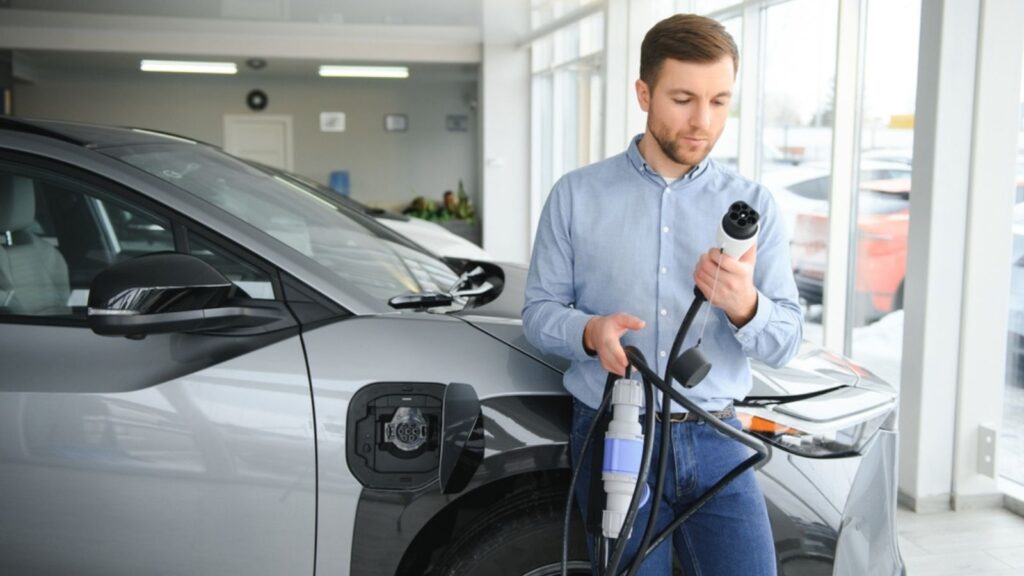
Some concerns are legit, but much of it is overblown anti-EV propaganda. Some people aren’t sold on EVs and go out of their way to get others to see things their way.
Here are 15 lies spewed by the anti-EV lobby — lies you probably believe hook, line, and sinker.
EVs Don’t Can’t Travel Far Enough

According to various sources, the average EV can travel 300 miles before requiring a charge. It’s possible to get EVs with 400 or even 500 miles, too. Meanwhile, the average U.S. adult travels 40+ miles daily. While range anxiety does exist, it’s usually exaggerated, considering how many miles the average person travels each day. So, a 300-mile EV isn’t so bad after all. That’s all the more true if you invest in home charging — particularly a Level 2 charger.
EVs Cost Too Much Money

Edmunds reports that the average price for ICE vehicles is $26,301, while it’s $34,538 for EVs. While that price gap is nothing to sneeze at, it is narrowing. And there’s no reason to believe that the gap won’t continue to shrink over time. Factoring into the equation the government rebates and incentives available to EV buyers, you can still score some pretty sweet deals.
EV Batteries Must Be Replaced Every Few Years

First things first. EV batteries are expensive. One source says they can cost anywhere from $2,500 to more than $20,000. While there have been high-profile cases of EV batteries biting the dust in a short amount of time, there are many instances of gas or diesel engines going kaput way too soon too. J.D. Power reports that EV batteries can last 10 to 20 years. So, while they’ll lose some of their capacity over time, they can still last decades.
EVs Are Unreliable

Some reports suggest EVs are less reliable than internal combustion engine cars, but other studies paint a different picture. For instance, one report says EVs are 59% less likely to suffer breakdowns than regular vehicles. So, if you’re worried about EV reliability, the solution is to research brands and models offering above-average or superior reliability.
EVs Take Too Long to Charge

Okay, there’s some truth to this statement. But the argument falls apart when looked at carefully. Using a level 2 charger, you can charge an EV from empty to 80% in four to 10 hours. The time can drop to the 20-minute-to-60-minute range with direct current fast charging.
You can refuel a traditional car within a few minutes at a gas station. But you can plug in an EV at home and wake up the next morning with the equivalent of a full tank of gas.
EVs Are Just a Passing Fad

Many anti-EV folks don’t believe the EV industry will take off. While there is some uncertainty, it doesn’t appear EVs will go the way of the Dodo bird. There’s plenty of roadway ahead.
EVs Suck on Road Trips

Again, there is some truth in this statement. If you buy an EV with 150 miles of range and embark on a cross-country road trip, you’ll regret the day you ever bought an EV. Before purchasing any vehicle, you should consider your use case. An EV with 150 miles won’t be a good road-tripping vehicle. The solution, of course, is to get an EV with a sufficient range.
EV Charging Stations Are Few and Far Between

While there are more gas stations than EV charging stations, only an anti-EV propagandist would deny that the network of EV charging stations is growing and improving. It’s better in some areas than others. But unless you live in the middle of nowhere, charging your EV won’t be a problem.
EVs Go Through Tires at an Alarming Rate

EV tires wear out faster than tires on gas-engine vehicles. But that’s because EVs are heavier and get instant torque. Is the tradeoff worth it? For many EV drivers, the answer is “Yes.” Remember, too, that how you drive can impact, for better or worse, how long your EV tires last.
EV Manufacturing Is Worse for the Environment Than Building Traditional Vehicles

Ford Motor Co. and the University of England released a study several years ago showing that EVs have about 64% less cradle-to-grave lifecycle emissions versus comparable internal combustion engine models. So, it’s a misconception that EVs lack true “green” cred.
EV Owners Often Regret Buying Them

Buyer’s regret isn’t something limited to some EV owners. If someone buys an EV without considering their needs, they may regret purchasing one. It’s about knowing what you’re getting into…before getting into it.
EVs Aren’t Real Cars

Manual cars used to be the norm, and people back then rolled their eyes at vehicles with automatic transmissions. But it’s now rare to find someone who can drive a stick shift. Is history repeating itself? While gas- and diesel-engine vehicles with automatic transmissions are the norm, EVs are now on the scene. Perhaps EVs will be the norm in the future.
EVs Lose Too Much Range in the Winter

EVs can lose 30% to 50% of their range in the winter. That’s no fun. But the anti-EV lobby won’t tell you that plugging in your EV to warm up the engine before driving can reduce the range loss. Consider, too, that cold weather can boost fuel consumption in traditional vehicles by as much as 28%.
EVs Are Hideous

Beauty is in the eye of the beholder. While some EVs are more aesthetically appealing than others, the same can be said for internal combustion engine cars. It’s a matter of finding one you like.
EVs Are Slow Pokes on the Road
Where did this myth come from? EVs are usually faster than comparable gas-engine cars. Many EVs deliver crazy-fast 0-60 mph times that are better than the 0-60 mph performance of internal combustion engine supercars.
Don’t Believe the Myths

While EVs aren’t perfect, no one ever said they were. And, just in case you need a reminder, gas- and diesel-engine vehicles aren’t flawless either. When deciding what car to buy, consider your use case and the options available to make an informed decision.
More From Driver’s Drift

14 Cars That Consistently Fail Crash Tests

15 Reasons You Should Never Buy a Car in Cash (Even if You Can Afford to)

15 Things Boomers Taught Us About Cars Which Are Totally Wrong Today

17 Hybrids to Avoid at All Costs


