Traffic regulation has existed since the early 1900s, which means that the US has consistently regulated traffic for over 120 years. During that time, many laws were passed, some were overturned, and many are still in effect today.
With such a vast array of traffic laws, some have become less enforced and are no longer as strictly upheld as they once were. Nonetheless, they remain technically binding and must still be adhered to whenever someone is engaged in traffic.
In this article, we’ll go through 18 driving laws you’ve been breaking without knowing, and you might just realize you’ve been a repeat offender all along!
Not Using Your Turn Signals

More than 50% of drivers in the US skip using turn signals when changing lanes or turning because they believe their actions are obvious and predictable.
However, not using the turn signals when performing such actions is illegal in many states and is known to cause many accidents—more than 2 million per year, to be exact.
Rolling Through Stop Signs

Rolling through stop signs is also common practice, as most drivers assume it is fine not to stop completely if there is no need for that. Even if the intersection seems quiet, one ought to come to a complete stop; otherwise, it could be a solid ground for a ticket.
Moreover, more than 700,000 accidents every year in the US are caused by rolling through stop signs, so be sure to keep this in mind.
Driving With Headphones On

Using headphones while behind the wheel is illegal in many states, and for good reason. Headphones severely limit our spatial awareness and hearing, and traffic isn’t always as predictable.
Using the car’s built-in Bluetooth system/AUX cable is a much better idea as it is perfectly legal and much safer – and isn’t nearly as likely to cause an accident.
Not Turning On the Headlights
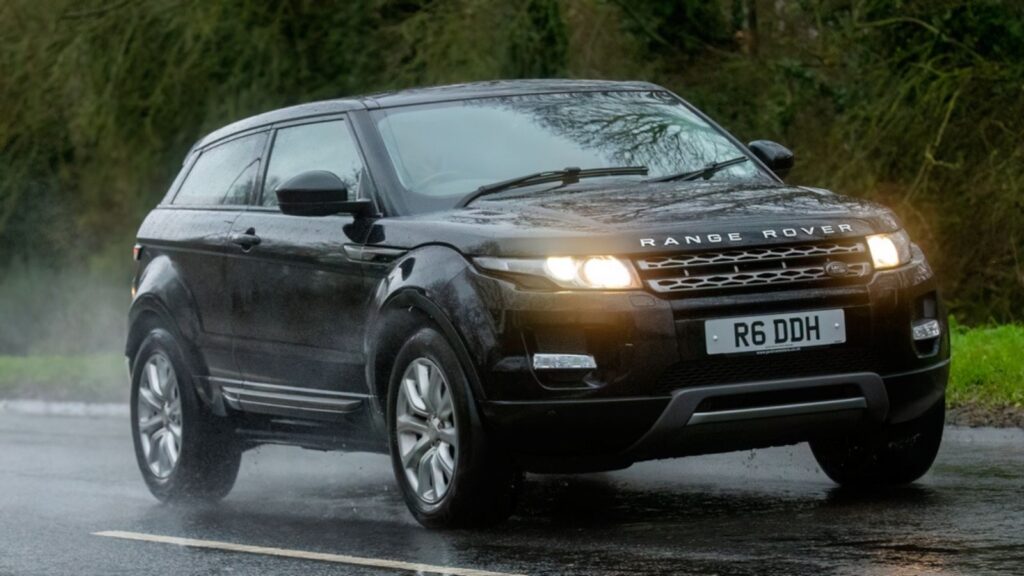
Different states have different regulations regarding headlights, especially during the summer months. However, once the weather gets foggy and rainy, most states mandate using headlights to lower the chances of an accident.
This also extends to fog lights, as these are especially necessary in bad visibility, such as heavy fog.
Blocking an Intersection

Most people don’t willfully block intersections, but it often happens that a person misjudges the space available or wants to squeeze through an amber traffic light but ultimately fails.
Consequently, a car may be stranded in the middle of an intersection, which is especially dangerous considering that almost half of all car accidents occur at intersections.
Idling an Engine

Approximately 31 states (and DC) have strict regulations on leaving a car idling for no apparent reason. Turning off the engine is necessary to comply with strict emissions regulations and keep the air as clean as possible.
Moreover, not using your engine while not moving also saves fuel and minimizes engine wear and tear.
Obstructing License Plates
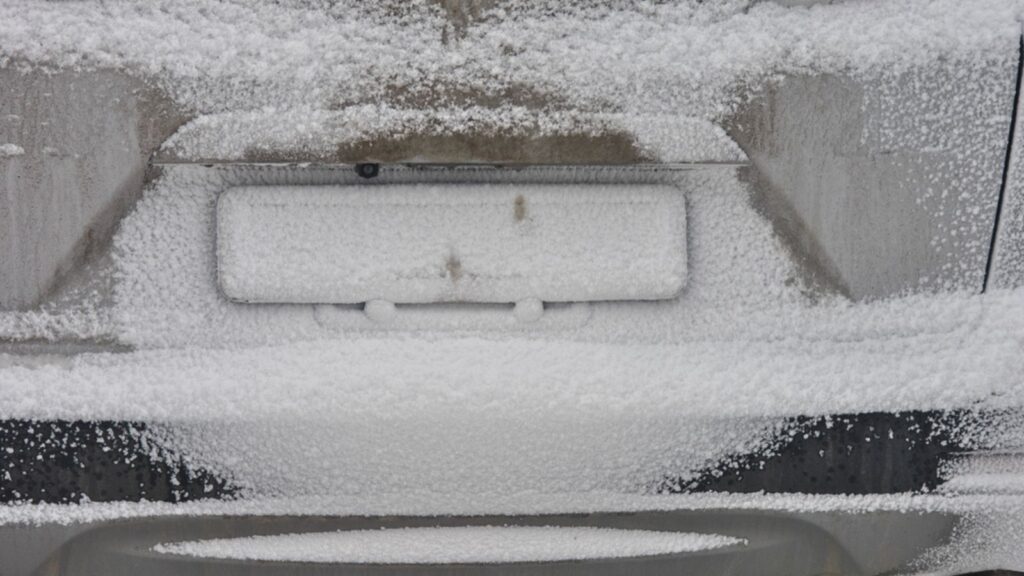
Most drivers would never intentionally obstruct license plates, but not many people are aware that dirt, leaves, or snow can do the same. This is illegal in certain states and could lead to undue attention from authorities or fines.
Therefore, it’s advisable to be mindful of this when driving in conditions with heavy snow, excessive road grime, or abundant leaves on the road.
Speeding in School Zones

In a recent survey, as many as 41% of people in the US admitted to speeding in a school zone. To say this is dangerous and irresponsible is an understatement, and whether knowingly or not, is one of the more egregious offenses on this list.
Failing to Yield to Funeral Processions

In some states, disrupting funeral processions is illegal and considered extremely disrespectful. Therefore, it’s best to err on the side of caution and yield to a funeral procession whenever such an action is possible.
Overloading a Vehicle

Carrying too many passengers or hauling too much cargo may also be illegal in some states. This is mostly due to cars having a maximum capacity up to which it is safe to transport goods and passengers. A good indicator is the number of functional seatbelts a car comes with.
Moreover, overloading vehicles with cargo can severely limit their handling and exert too much pressure on the tires.
Passing on the Right
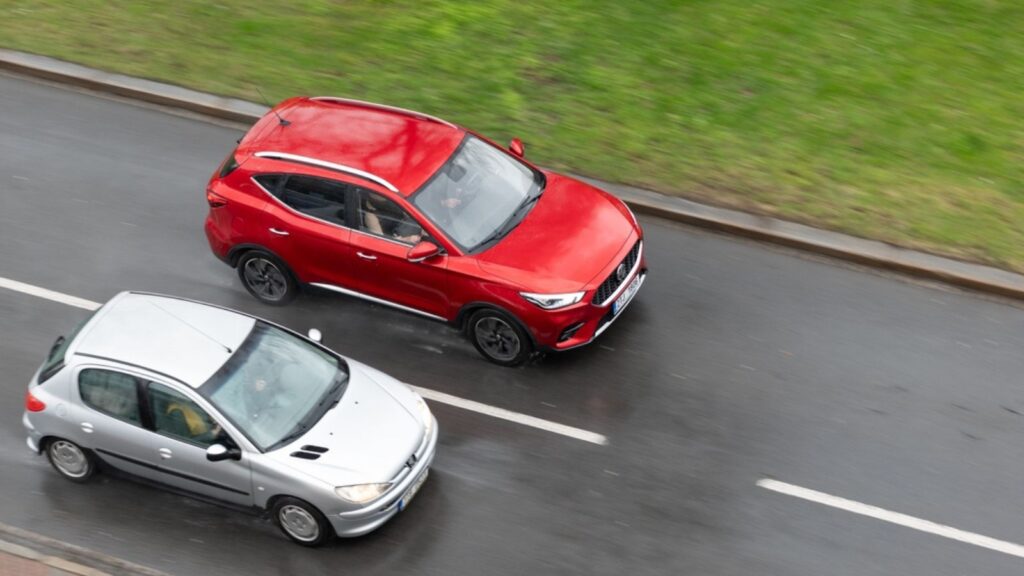
This one is rather obvious to many people, but we all encounter those who overtake on the right on a daily basis. While some people think that all traffic lanes are the same, not all lanes are created equal.
Passing on the right is a dangerous maneuver that could result in a fine or, even worse, an accident. However, this depends on the road type and the associated state.
Driving Too Slowly on the Left Lane

Many states in the US enforce “keep to the right” laws, which require all drivers to move to the right unless they are overtaking. With such laws in force, some people still hug the left lane and drive slower than those on the right.
Impeding traffic in the left lane is often a serious traffic violation. However, if one does encounter a slow-moving car in the left lane, it is also often not allowed to pass it by using the right lane.
Failing to Clear Snow Off the Car

Driving with snow and ice on a car is illegal in some states, as both can become hazardous to other drivers and limit the driver’s visibility. Debris can fly off the car, damage surrounding vehicles, or even injure pedestrians.
Therefore, even if a state does not strictly allow it, it’s always best to clean snow and ice from the car as soon as possible.
Flashing Your Headlights Improperly
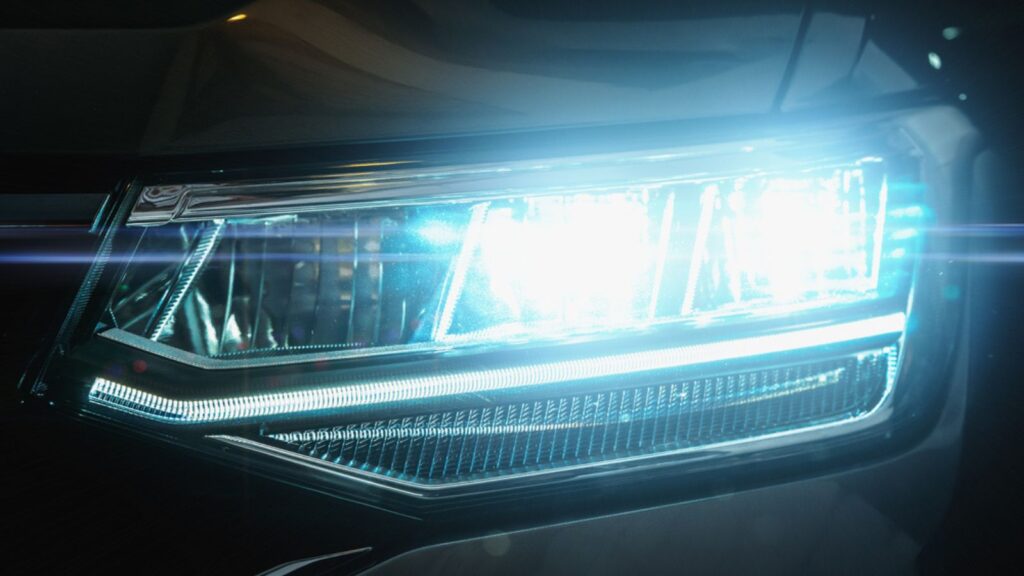
There are instances where one can flash the headlights and others where this is strictly forbidden. For example, flashing your lights to alert oncoming traffic of police is viewed as an obstruction of justice in some states.
On the other hand, some states deem this part of the First Amendment and an extension of free speech. The better option might be to focus on your driving and let other people do the same.
Using Your Horn Improperly

As with flashing your lights, misusing your horn can also lead you to legal trouble. In most states, the horn is legally reserved for situations where one needs to alert others of potential dangers or if there is something others in traffic need to know.
Using the horn for any reason is illegal in many countries and can result in fines and citations. Interestingly, such cases have even reached the US Supreme Court.
Failing to Update Driver’s License Address

This one is a typical oversight by most drivers but could still land you a fine. Most states require you to update your driver’s license address in hours or days after relocating, so it’s best to keep that in mind if you ever do.
Littering From Vehicles

Throwing anything out of a car window, even if it’s just a piece of gum or a cigarette butt, could present a legal basis for hefty fines, in some states, up to $5.000 fine. Littering is not something one should do in general, but especially while driving, regardless of what it might be.
Speeding Up to Beat a Yellow Light

We are all guilty of sometimes speeding up to beat a traffic light before it turns red, but this is regarded as illegal in many states and for a very good reason.
A considerable number of accidents happen every year because people are either unable to catch the light before it turns red or simply because they are speeding, as almost half of them are unable to clear the intersection by the time the light has turned red.
More From Driver’s Drift

16 Must-Have Car Gadgets That All Senior Motorists Should Own

12 Most Reliable Hybrids You Should Consider Buying as Your Next Drive

15 Best-Looking SUVS On the Market Today

14 Red Flags That the Odometer on Your Used Car Is Skewed