

Understand basic car terminology? You may think you have it all down until you bring your car in for repairs and realize you have no clue what your mechanic is talking about.
Sure, you can nod along like you know what they’re saying. But deep down, you may feel like they’re speaking another language entirely.
In case you’re not familiar with them, here are 16 commonly used car terms.
ABS (Anti-Lock Braking System)

If your mechanic mentions something about your ABS, it’s essential to understand that this technology prevents the wheels on your vehicle from locking during braking. ABS brakes give you better control, potentially preventing you from getting into a collision.
Air Filter

Most people have some understanding of what an air filter is—even if they don’t know where to find it. Located under the hood of your vehicle, the air filter purifies the air inside the engine.
It’s designed to prevent dirt, debris, and more from damaging the engine, leading to costly repairs or replacement. That’s a good reason to change the air filter at intervals listed in the owner’s manual.
Alternator

The alternator is an essential part of your vehicle’s electric charging system. When working correctly, the alternator charges the battery. Otherwise, your battery will deplete, leaving you stranded.
Brake Pads

Your vehicle’s braking system is essential. After all, what can be more frightening than driving on the highway when you suddenly lose the ability to stop your car? That’s the stuff of nightmares.
Brake pads press against the brake rotors, using friction to slow down the vehicle. If a mechanic says your brake pads are worn out, they may no longer be able to slow down your car.
Catalytic Converter

You might have heard stories in the news about people stealing catalytic converters. A catalytic converter is a component of your vehicle’s exhaust system. It transforms unhealthy motor exhaust pollutants into carbon dioxide, water, and nitrogen, reducing their environmental impact.
Catalytic converters are big money makers on the black market, which is why thieves covet them.
Drivetrain

When your mechanic mentions the drivetrain, they’re talking about the system that connects the drive axles to the transmission. Your vehicle’s drivetrain can be front-wheel drive, rear-wheel drive, all-wheel drive, or four-wheel drive. It transfers power from the engine to the wheels.
ECU (Engine Control Unit)

Your car’s ECU, or electronic control unit, is supposed to ensure your engine works smoothly. Also referred to as the engine control module, the ECU governs the operation of an internal combustion engine, getting its information from the throttle position sensor, oxygen sensor, and crankshaft position sensor to accomplish this essential task.
Fuel Pump

Your fuel pump transfers fuel from the gas tank into the combustion chamber, where the fuel is transformed into energy that starts the engine. If this component isn’t working right, you may be unable to start your vehicle. Additionally, a faulty fuel pump can lead to acceleration problems, sputtering, and reduced fuel efficiency.
Horsepower (HP)

Your car’s horsepower symbolizes how much power it has under the hood. Think of it as a measurement that tabulates how fast a car’s engine produces force.
MPG (Miles Per Gallon)

You’ll want to consider the miles per gallon when looking for a new or used car. That’s especially true if you’d like to spend as little as possible at the gas pump. But another reason to know your car’s MPG is that you’ll know something’s wrong if the MPG suddenly dips sharply. A mechanic can help determine why your vehicle’s MPG is lower than usual.
Odometer

Your vehicle’s odometer is an instrument that shows how much distance you’ve traveled. Keep an eye on it so you don’t miss maintenance recommendations in the owner’s manual.
Oil Filter
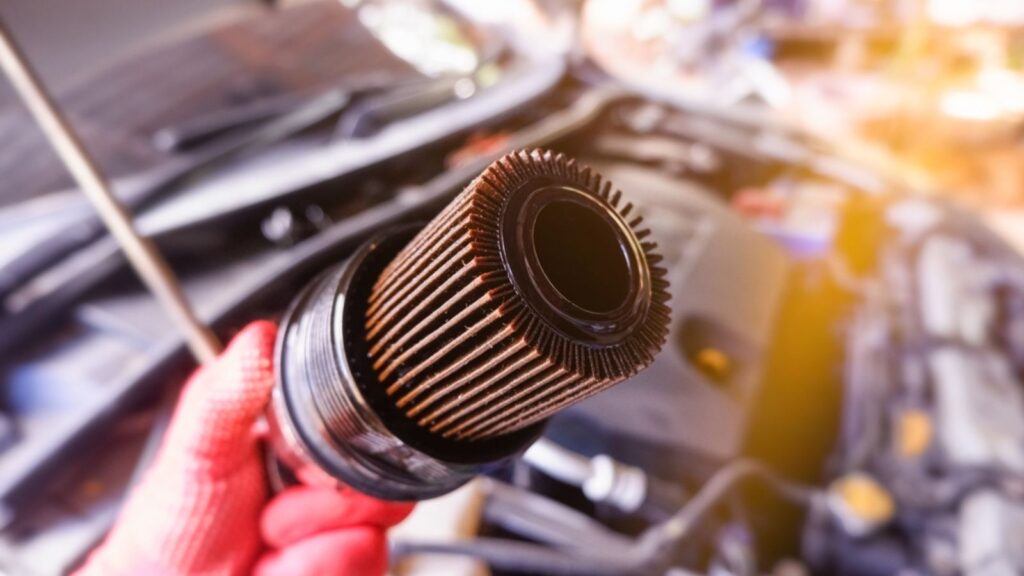
When you change your engine oil, it’s a good idea to change the oil filter as well. The filter is designed to keep contaminants from getting into the engine.
Serpentine Belt

The serpentine belt is a belt you’ll find under the hood of your vehicle. It directs power to the air conditioning, alternator, power steering pump, and other engine accessories. Check your owner’s manual so you know when to replace it. If it breaks before you get around to replacing it, you could damage the engine accessories powered by the serpentine belt.
Struts

The struts on your vehicle are essential components of the suspension system. They help support the weight of your car and assist in absorbing shocks from traveling on the road. You won’t feel the bumps and uneven surfaces as much if the struts are in good shape.
Suspension

Your car’s suspension system helps stabilize and control the vehicle to manage dips and bumps on the road or freeway. It includes tires, shock absorbers, struts, springs, and linkages.
Transmission

The transmission uses gears to direct the power created by the motor to the wheels. You can have an automatic transmission or a manual transmission. It’s an essential part of your car’s drivetrain.
Learn the Lingo

Understanding commonly used terms in the car space is essential. It makes it easier to talk to your mechanic when you understand what they’re talking about. Otherwise, discussions will be unnecessarily frustrating for you and your mechanic.
More From Driver’s Drift

14 Cars That Consistently Fail Crash Tests

15 Reasons You Should Never Buy a Car in Cash (Even if You Can Afford to)

15 Things Boomers Taught Us About Cars Which Are Totally Wrong Today

17 Hybrids to Avoid at All Costs


