

The auto industry is headed into a new era of convenience and safety. Gone are the days when driver assistance only meant navigation and media availability to the driver. Today’s driver assistance systems take care of the most active drive actions to keep passengers alive. These driver assistance systems are present in some or others in almost every model from 2020. They are no longer marketed to people concerned with safety or those who want the extra convenience but come standard. Here are a few of the best driver assistance technologies out there, featured according to brand.
Ford BlueCruise

Ford’s BlueCruise is among the market’s most highly rated driver assistance packages. The system uses a monitoring camera to ensure the driver is paying attention to the road ahead. It also allows for hands-free driving on prequalified sections of the highways.
The system uses blue lighting on the digital instrument cluster to show when the vehicle is in a hands-free zone. The BlueCruise also provides smooth steering inputs and keeps the car in the center of the lane, even on curves.
Needless to say, the system is not fully autonomous, and BlueCruise still relies on the driver to remain attentive at all times.
Nissan ProPILOT Assist 2.0

The ProPILOT Assist is a hands-on system that combines Nissan’s Intelligent Cruise Control and Steering Assist. It also has a stop-and-hold function, which may bring the car to a stop and then hold it in place. The driver assists with Navigation linkage syncs to provide additional data for better predicting the freeway.
Some of the new features available on the system include ‘Speed Adjust by Route,’ which assists models in reducing their speed for tight curves. The Speed Limit Assist also employs a camera to detect the posted speed limit and automatically modifies the vehicle’s maximum set speed.
Mercedes-Benz Driver Assistance

The Mercedes Benz Driver Assistance combines convenience and safety tools to provide a comfortable driving experience. This is achieved by reducing the need for consistent braking and acceleration.
Some typical Mercedes Driving assistance package features include active distance learning, steering assist, emergency stop assist, lane keeping, blind spot, and lane change assistance. Owners may also get the Driver Assistance Package PLUS, which builds on the attributes listed while adding technology for the best protection.
BMW Highway Assistant

The BMW highway assistant is the latest advanced driver assistance system iteration. It provides hands-off driving on the motorways with fixed barriers between carriageways and is an additional function of the Steering and Lane-Keeping Assistants. However, one must keep their hands on the wheel when not on the highway.
Since BMW relies on touch sensors, the driver does not have to worry about engaging the wheel to remind it of their presence. The Highway Assistance also depends on the feedback of the head-up display items and the gauge cluster for it to work effectively.
Toyota Safety Sense 3.0

The Toyota Safety Sense 3.0 system is designed like other driver assistance packages to help drivers avoid collision to the front. This compares with different driver assistance options as it keeps the appropriate following distance to discourage drivers from jumping in front while providing a sufficient gap to brake.
Audi Adaptive Cruise Assist

Most new Audi models are equipped with Adaptive Cruise Control driver assistance. With stop-and-go features, the car accelerates, brakes, and maintains the same speed in real time. This system uses cameras, laser scanners, radar, and ultrasonic sensors to monitor the environment. The system also includes steering intervention so the vehicle remains within the center of the desired lane. In some models, the system may detect if the road ahead is narrow so that it does not allow side-by-side driving.
Tesla Autopilot

Tesla’s autopilot is the main self-driving package the brand utilizes to help the car steer, accelerate, and brake in its lane. One requires a firm grip on the steering wheel to overcome the auto-steer functionality. It does work better on the highway, though, as the system can better map the situation by moving through traffic cleanly.
This system also chooses a driving style depending on the owner’s preference, which may be laid back, average, and assertive. It automatically adapts to changes in the speed limit and can change lanes to get the driver in position for an upcoming exit.
Rivian Driver Plus

The Rivian Driver Plus combines adaptive cruise control with active lane keeping, allowing for hands-free operation on particular roads. Hands-free driving is one of the advanced elements of modern safety technology.
The Driver Plus also has automatic emergency braking forward collision warnings, lane departure warnings, blind spot monitoring, rear cross-traffic, and automated high beams.
Honda Sensing
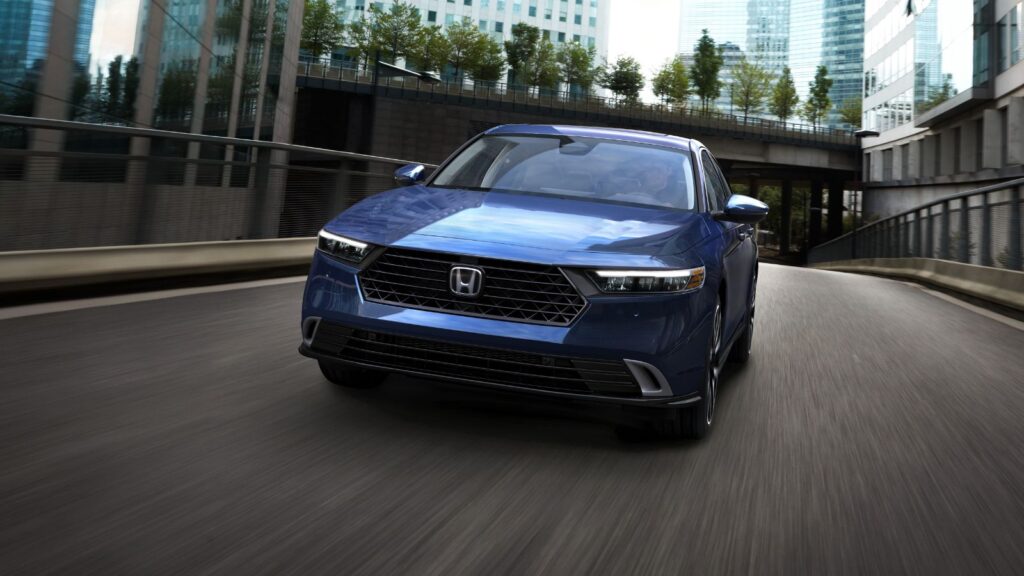
The Honda Sensing is the brand’s intelligent package suit for driver assistance packages. It is designed to alert drivers to things they may miss while driving. The package is developed based on external recognition technologies.
This system recognizes the environment in front, at the side, and behind the vehicle, then assists the driver in achieving safe driving by avoiding a collision.
Volvo/Polestar Pilot Assist

The Volvo’s Pilot Assist system may assist the driver in operating the vehicle between the side markings. It also helps them maintain even speeds and preselected time intervals. Pilot Assist is mainly used for motorways and similar roads, contributing to comfortable driving. One can also select the desired speed and time intervals for the vehicles in front.
General Motors SuperCruise

The Super Cruise driving assistance package is the first hands-free tool for compatible roads and is currently offered in most of the new GMC models. Provided the driver is attentive and there are appropriate conditions, this package allows the vehicle to operate hands-free. It is used collaboratively with OnStar, allowing real-time positioning cameras, sensors, and LIDAR to detect when the road has curves. This is great for making long drives comfortable. All models with Super Cruise assistance also include three years of connectivity for functionality before purchasing.
Ford Co-Pilot360

The Co-Pilot 360 refers to a suite of driver-assist attributes that can help the owner drive more safely. It combines current driver assistance packages like the pre-collision assist with an automatic emergency, lane keeping assist, review camera, and automatic high beams.
The difference with the BlueCruise system is that the former is a suite of current advanced driver assistance tools to maintain vehicle control. Bluecruise is more oriented toward hands-free driving. The CoPilot suite also allows access to post-collision braking, evasive steering assist, and adaptive cruise control.
Fully Automated Driving Systems are the Future

Driver assistance packages in the current models are tailored to help the driver have a comfortable drive. In some cases, the system is so advanced that it facilitates some form of self-driving, provided highway conditions exist. This is done by combining cruise control with sensors in every direction to avoid collisions. The result is systems that can accelerate, brake, and navigate traffic. In the future, this will lead to autonomous systems that can perform self-driving without human input.
More From Driver’s Drift

15 Classic Cars That Still Fly Off the Lot

16 Used Cars That Will Outlast Most New Cars on the Dealership Lot

12 Affordable Sports Cars That Can Go Head-to-head With the Porsche 911

16 Used Cars Known to Last Over 500,000 Miles


Mark Muhoro is a car enthusiast and writer who loves everything about automobiles. With over 11 years of experience in the automotive industry, Mark has become an expert in how cars work and what makes them special. He writes clear and interesting articles about cars for magazines and websites, making valuable contributions to renowned platforms like Vroom Magazine, Internet Brands, and Contentmotive.


